




In high-performance motion systems, torque is more than just a specification on a datasheet, it defines how quickly, accurately, and reliably a motor can respond under load. Among torque-related parameters, peak torque is often misunderstood yet critically important, especially in applications that demand rapid acceleration and precise control. So, what exactly is the peak torque of a motor, how does it differ from continuous torque, and why does it play a decisive role in motor selection? Understanding this concept is the first step toward designing smarter, more efficient motion systems.
What Is Torque in an Electric Motor?
Torque in an electric motor refers to the rotational force that the motor generates to move a load. In simple terms, it describes how strongly a motor can twist its shaft to overcome resistance and produce motion. The higher the torque, the greater the motor’s ability to start, accelerate, or maintain movement under load.
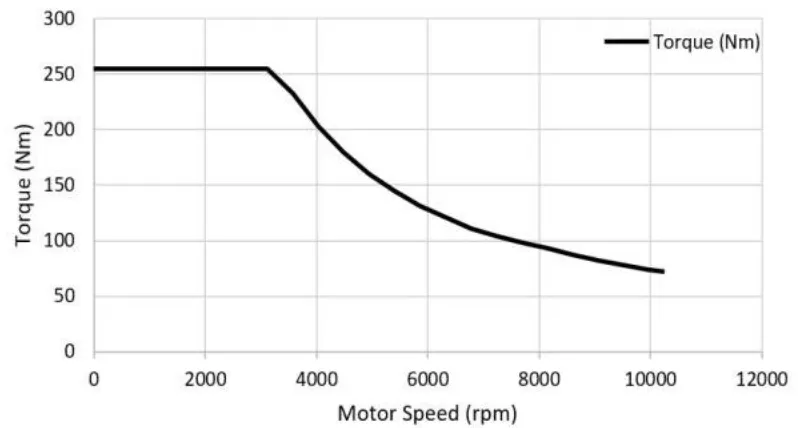
From a physical perspective, torque is the product of force and distance from the axis of rotation. In electric motors, this force is created by the interaction between the magnetic field of the stator and the current flowing through the rotor windings. When these electromagnetic forces interact, they generate a turning effect that drives the motor shaft.
Torque plays a fundamental role in determining how a motor behaves in real-world applications. At startup, sufficient torque is required to overcome inertia and static friction. During acceleration, torque dictates how quickly the motor can reach its target speed. Under steady operation, torque must continuously balance the applied load to maintain stable motion.
In motor specifications, torque is typically measured in newton-meters (Nm) and varies depending on operating conditions such as current, voltage, temperature, and speed. Importantly, torque is not a fixed value, it changes dynamically as load and system demands change. This is why different torque ratings, such as continuous torque and peak torque, are defined to describe a motor’s performance limits under specific conditions.
Understanding torque is essential when designing or selecting a motor for industrial systems. Whether in rotary motors driving mechanical components or in linear motor systems where torque is translated into linear force, torque directly influences positioning accuracy, responsiveness, and overall system efficiency. A clear grasp of this concept sets the foundation for understanding more advanced parameters, including peak torque and its role in high-performance motion control.
What Is Peak Torque of a Motor?
Peak torque of a motor is the maximum torque that the motor can produce for a short period of time without sustaining damage. It represents the highest instantaneous force output the motor can deliver when required, typically during transient conditions such as startup, rapid acceleration, sudden load changes, or precise positioning corrections.
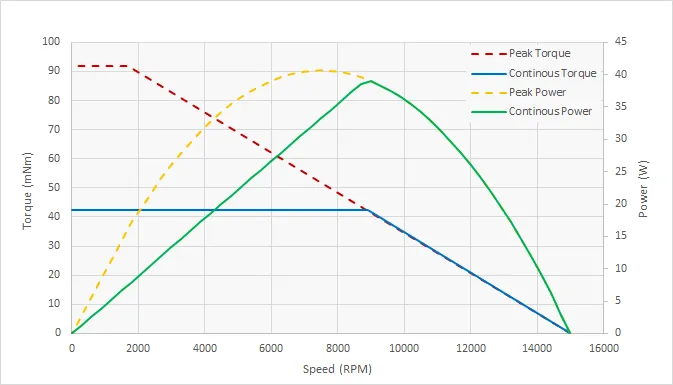
Unlike continuous torque, peak torque is not designed to be maintained indefinitely. It is limited by thermal constraints, current capacity, and the mechanical strength of the motor components. When a motor operates at peak torque, it draws significantly higher current, generating increased heat within the windings and magnetic system. For this reason, peak torque is strictly time-dependent and must remain within the manufacturer’s specified duration to avoid overheating or reduced motor lifespan.
In practical applications, peak torque is crucial for achieving high dynamic performance. It allows the motor to overcome inertia, handle short-term overloads, and respond quickly to control commands. For example, in automation systems, robotics, and precision motion control, peak torque enables fast acceleration and deceleration without compromising positioning accuracy.
Peak torque is typically several times higher than a motor’s continuous torque rating, often expressed as a multiple such as 2× or 3× continuous torque. However, a higher peak torque value does not necessarily indicate a more powerful or efficient motor. Its real value lies in how effectively the motor can deliver short bursts of high force while maintaining thermal stability during normal operation.
Understanding peak torque is essential for proper motor selection and system design. Engineers must evaluate not only the peak torque value itself but also the allowable duration, duty cycle, and operating conditions under which it can be safely applied. When used correctly, peak torque provides the performance headroom needed for demanding industrial applications without sacrificing reliability or long-term efficiency.
How Peak Torque Is Generated in Electric Motors
Peak torque in electric motors is generated by momentarily increasing the electromagnetic force acting within the motor. This occurs when the motor drive supplies a higher current than its continuous operating level, strengthening the magnetic interaction between the stator and the rotor. Since motor torque is directly proportional to current, this short-term current boost enables the motor to deliver a significantly higher torque output.
At the core of this process is the motor’s electromagnetic design. When current flows through the motor windings, it creates a magnetic field that interacts with the permanent magnets or induced magnetic field of the rotor. During peak torque conditions, the drive system allows a temporary rise in current, intensifying this magnetic interaction and producing a stronger rotational force. The motor’s construction, such as winding configuration, magnetic materials, and air gap design, determines how effectively it can convert this increased current into usable torque.
Motor drives and control algorithms play a critical role in generating peak torque safely. Advanced controllers regulate current precisely, ensuring that the motor can reach its peak torque limit without exceeding thermal or electrical constraints. Features such as current limiting, torque control loops, and real-time feedback from sensors help maintain stability during high-torque events, even under rapidly changing load conditions.
Thermal capacity is another key factor in peak torque generation. While the motor can tolerate high current for short durations, prolonged exposure would cause excessive heat buildup. The ability to generate peak torque therefore depends on the motor’s thermal mass, cooling method, and insulation class. Once thermal limits are approached, the drive system automatically reduces current to protect the motor, transitioning operation back to its continuous torque range.
Why Peak Torque Is Critical in Industrial Applications
In industrial environments, motors rarely operate under ideal, steady-state conditions. Instead, they are constantly challenged by rapid motion changes, heavy loads, and strict accuracy requirements. Peak torque provides the short-term performance reserve that allows industrial systems to meet these demands without sacrificing stability or reliability.
1. Enabling Rapid Acceleration and Deceleration
Industrial machines are designed to move fast, stop precisely, and repeat the same motion cycle thousands of times per day. Peak torque plays a decisive role during these brief but demanding moments of acceleration and deceleration. When a motor starts from rest or rapidly changes speed, it must overcome inertia almost instantly. Without sufficient peak torque, acceleration becomes sluggish, limiting overall system speed.
During deceleration, peak torque is equally important. The motor must generate high opposing torque to slow down the load quickly while maintaining control. This capability reduces overshoot, shortens settling time, and ensures smooth transitions between motion segments. In high-speed production lines, the ability to accelerate and decelerate efficiently directly impacts cycle time, throughput, and energy efficiency.
2. Overcoming High Inertia and Variable Loads
Many industrial applications involve moving heavy components, large tools, or variable payloads. These systems experience significant inertia, especially at startup or during directional changes. Peak torque provides the necessary force to initiate motion without stalling or excessive strain on mechanical components.
In addition to inertia, industrial loads are often unpredictable. Sudden resistance, material variations, or process-related disturbances can cause short-term torque spikes. Peak torque allows the motor to absorb these disturbances seamlessly, maintaining stable motion and preventing loss of synchronization or positioning errors. This capability is critical in ensuring consistent operation in real-world industrial conditions.
3. Improving Precision and Positioning Accuracy
Precision is a defining requirement in modern industrial systems such as robotics, CNC machining, semiconductor equipment, and linear positioning stages. Peak torque contributes directly to positioning accuracy by enabling fast and decisive motor responses to control commands.
When the system needs to correct position errors, change direction, or perform fine adjustments, the motor must react immediately. Peak torque allows these corrections to happen quickly, minimizing lag and reducing oscillation or vibration. As a result, the system achieves tighter tolerances, higher repeatability, and smoother motion profiles, key performance indicators in precision-driven industries.
4. Supporting High-Dynamic Motion Profiles
Advanced industrial automation increasingly relies on complex motion profiles that involve frequent starts, stops, and rapid speed changes. These high-dynamic profiles place intense short-term demands on the motor. Peak torque enables the motor to follow these profiles accurately without compromising control or thermal stability.
In applications such as pick-and-place systems, packaging machines, and automated inspection equipment, motion must be both fast and precise. Peak torque provides the necessary force during critical transitions while allowing the motor to operate within safe limits during steady-state phases. This balance ensures optimal performance without excessive wear or overheating.
5. Enhancing System Reliability and Design Flexibility
From a system design perspective, peak torque offers valuable flexibility. By selecting a motor with sufficient peak torque capability, engineers can handle short-term overloads without oversizing the motor for continuous operation. This results in more compact designs, lower energy consumption, and reduced system costs.
Moreover, operating within the motor’s peak torque limits helps protect mechanical components such as bearings, couplings, and transmission elements. Controlled use of peak torque reduces mechanical stress and thermal fatigue, extending the lifespan of both the motor and the entire motion system. In industrial environments where uptime is critical, this reliability is a major advantage.
Peak torque is critical in industrial applications because it defines how effectively a motor handles the most demanding moments of operation. By enabling rapid acceleration, absorbing load variations, supporting precise positioning, and accommodating high-dynamic motion profiles, peak torque ensures that industrial systems remain fast, accurate, and reliable. When properly integrated into motor selection and system design, peak torque becomes a key driver of long-term performance and operational efficiency.
Common Misconceptions About Peak Torque
Peak torque is one of the most frequently misunderstood motor specifications. Many design mistakes and performance issues in industrial systems stem from incorrect assumptions about what peak torque actually represents and how it should be used. Below are some of the most common misconceptions engineers and system designers encounter.
- Peak torque can be used continuously: A common misunderstanding is assuming that a motor can operate at its peak torque indefinitely. In reality, peak torque is strictly time-limited. Sustained operation at peak torque leads to excessive current draw and rapid heat buildup, which can damage windings, degrade insulation, and significantly shorten motor lifespan.
- Higher peak torque always means a stronger motor: A motor with a higher peak torque rating is not necessarily more powerful or better suited for every application. Peak torque reflects short-term overload capability, not long-term performance. A motor with moderate peak torque but high continuous torque may be far more suitable for applications requiring sustained force.
- Peak torque is the same as starting torque: While peak torque is often available at startup, the two are not identical. Starting torque refers specifically to the torque required to initiate motion from rest, whereas peak torque can occur at various points during operation, such as acceleration, deceleration, or sudden load changes.
- Peak torque alone determines system performance: Some designers focus solely on peak torque values when selecting a motor. However, overall system performance depends on a combination of factors, including continuous torque, speed range, thermal limits, drive capability, and duty cycle. Ignoring these factors can result in inefficient or unreliable designs.
- Peak torque ratings are directly comparable across all motors: Peak torque specifications can vary significantly depending on manufacturer definitions, test conditions, and allowable duration. Comparing peak torque values without considering time limits, cooling conditions, and drive constraints can lead to incorrect conclusions and poor motor selection.
- Using peak torque frequently does not affect motor life: Even when operated within specified limits, frequent use of peak torque increases thermal and mechanical stress. Over time, this can accelerate wear and reduce system reliability if not properly managed through cooling, control strategies, and appropriate duty cycle design.
Understanding what peak torque is not is just as important as understanding what it is. By avoiding these common misconceptions, engineers can make more informed motor selection decisions, design more reliable motion systems, and fully leverage peak torque as a performance advantage, rather than a hidden risk.
Conclusion
Peak torque is not just a technical specification, it is a defining factor in how a motor performs during the most demanding moments of operation. From rapid acceleration and precise positioning to handling sudden load changes, peak torque provides the performance margin that modern industrial systems rely on to stay fast, accurate, and reliable.
However, peak torque only delivers its true value when it is properly understood and correctly applied. Confusing peak torque with continuous torque, or overlooking its time and thermal limitations, can lead to inefficient designs and reduced system lifespan. By evaluating peak torque alongside duty cycle, control strategy, and application dynamics, engineers can make smarter motor selection decisions that balance performance with long-term reliability.

