




In industrial motion systems, performance is often judged by speed, torque, and precision, but one critical factor is frequently overlooked: shaft design. The choice between a solid shaft motor and a hollow shaft motor can significantly impact not only how efficiently power is transmitted, but also how compact, stable, and maintainable an entire system becomes.
While both designs serve the same fundamental purpose, their structural differences lead to very different real-world outcomes in automation, robotics, and linear motor applications. Understanding these differences is essential for engineers and manufacturers who want to build systems that are not just functional, but truly optimized.
What Is a Solid Shaft Motor?
A solid shaft motor is a type of electric motor in which the output shaft is manufactured as a single, solid cylindrical piece, typically made from hardened steel or alloy materials. This solid shaft extends directly from the motor’s rotor and is responsible for transmitting torque from the motor to the driven load through mechanical connections such as couplings, pulleys, or gearboxes.
Unlike hollow shaft designs, the solid shaft has no internal cavity. Its full cross-sectional structure allows it to withstand higher mechanical stress, making it especially suitable for applications that require high torque, strong axial stability, and long-term durability.
From a design perspective, solid shaft motors follow a traditional and widely adopted architecture in industrial motion systems. Their simplicity, proven reliability, and compatibility with standard mechanical components have made them a long-standing choice across many industries.
Core Structural Characteristics of Solid Shaft Motors
One of the defining features of a solid shaft motor is its high mechanical rigidity. Because the shaft is completely solid, it offers excellent resistance to bending and torsional deformation, even under heavy or fluctuating loads. This rigidity helps maintain consistent torque transmission and minimizes mechanical wear over time.
Solid shaft motors also provide a clear and straightforward power transmission path. Torque flows directly from the rotor to the shaft and then to the driven component via external mechanical elements. This makes system design more predictable and easier to calculate during the engineering phase.
Another important characteristic is manufacturing and installation simplicity. Solid shafts are easier to machine, align, and integrate with widely available couplings and mounting systems. For many industrial setups, this translates into faster installation, easier replacement, and lower overall maintenance complexity.
In a solid shaft motor, torque is transferred mechanically from the rotor to the shaft and then to the load using intermediate components. Common torque transmission methods include:
- Flexible or rigid couplings
- Belt and pulley systems
- Gearboxes and reducers
While these additional components slightly increase system length and complexity, they also provide design flexibility. Engineers can fine-tune speed ratios, torque output, and shock absorption depending on application requirements.
This modular transmission approach makes solid shaft motors particularly attractive in systems where load characteristics may change or where mechanical adjustments are expected over time.
Typical Applications of Solid Shaft Motors
Thanks to their robustness and versatility, solid shaft motors are widely used in demanding industrial environments, including:
- Conveyor and material handling systems
- CNC machines and machine tools
- Industrial pumps and compressors
- Heavy-duty automation equipment
- Linear motion systems requiring strong mechanical support
In these applications, reliability and load-bearing capacity often outweigh the need for compact design, making solid shaft motors a practical and cost-effective choice.
A solid shaft motor is often the preferred option when the application involves:
- High torque or heavy loads
- Long operating hours and continuous duty cycles
- Harsh industrial environments
- The need for proven, easy-to-maintain motor architecture
For many traditional industrial systems, the solid shaft motor remains a dependable foundation, especially when durability and mechanical strength are top priorities.
What Is a Hollow Shaft Motor?
A hollow shaft motor is an electric motor designed with an output shaft that contains a central bore instead of being completely solid. This hollow structure allows the motor to be mounted directly onto a driven shaft or load, eliminating or reducing the need for additional mechanical components such as couplings, belts, or gearboxes.
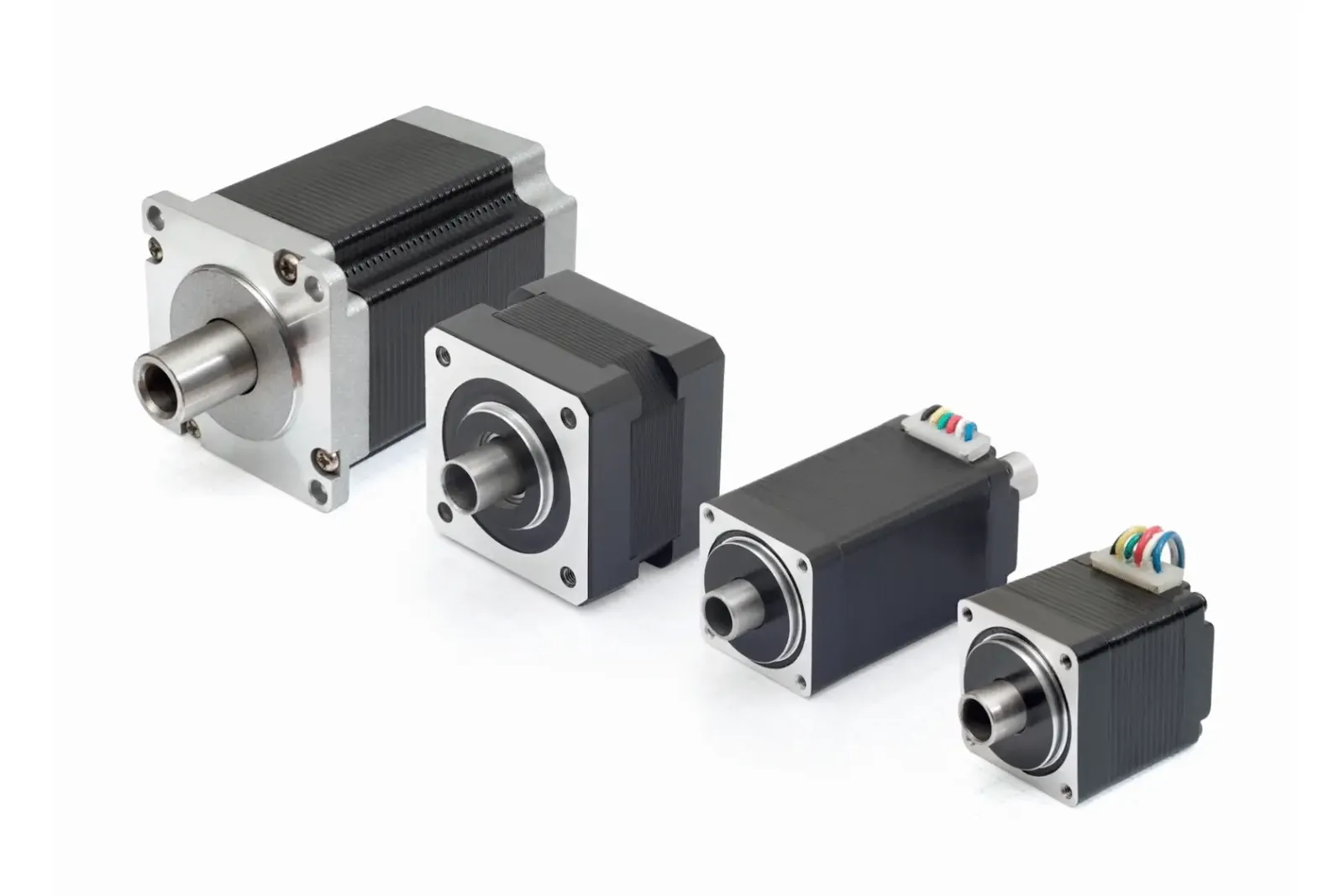
Rather than transmitting torque through external connectors, a hollow shaft motor enables direct torque transfer, which improves alignment accuracy and simplifies overall system design. This architecture is especially valued in modern automation and motion control systems where space efficiency, precision, and mechanical simplicity are critical.
Core Structural Characteristics of Hollow Shaft Motors
The most distinctive feature of a hollow shaft motor is its integrated mounting capability. The hollow bore is engineered to fit precisely over the driven shaft, allowing the motor to become part of the load structure itself. This design significantly reduces misalignment risks, which are a common cause of vibration, noise, and premature component wear in traditional motor setups.
Despite having less material than a solid shaft, hollow shaft motors are engineered to maintain high torsional stiffness through optimized geometry and advanced materials. The result is a compact yet mechanically efficient motor capable of delivering stable torque while occupying less axial space.
Another key characteristic is system compactness. By removing intermediate transmission elements, hollow shaft motors help shorten machine length, reduce weight, and simplify layout constraints, an important advantage in tightly packed automation lines and robotic systems.
Torque transmission in a hollow shaft motor occurs through direct mechanical engagement between the motor and the driven shaft. Once mounted, torque is transferred without flexible couplings or external transmission devices, creating a rigid and highly accurate drive connection.
This direct-drive approach offers several technical benefits:
- Improved concentricity and alignment
- Reduced backlash and vibration
- Higher positioning accuracy in motion systems
- Lower energy losses caused by mechanical intermediates
As a result, hollow shaft motors are frequently chosen for applications that demand high precision, smooth motion, and fast response times.
Typical Applications of Hollow Shaft Motors
Hollow shaft motors are commonly used in industries and systems where compact design and precision are essential, such as:
- Robotics and collaborative robots (cobots)
- Packaging and labeling machines
- Automated assembly lines
- Precision positioning and indexing systems
- Linear motor and advanced motion control applications
These applications benefit greatly from reduced mechanical complexity and enhanced alignment accuracy.
A hollow shaft motor is often the best option when the application requires:
- Limited installation space
- High positioning accuracy and low vibration
- Simplified mechanical design
- Reduced maintenance and fewer wear components
In environments where efficiency, precision, and clean system integration are priorities, hollow shaft motors offer a modern and highly effective solution.
Solid Shaft vs Hollow Shaft Motors: Key Differences
Although solid shaft and hollow shaft motors perform the same fundamental function, converting electrical energy into mechanical motion, their structural design leads to very different system-level outcomes. Understanding these differences helps engineers choose not just a motor, but the most efficient and reliable motion solution for their application.
1. Shaft Structure and Mechanical Design
At the core of the comparison lies the most obvious difference: the shaft itself.
A solid shaft motor uses a fully solid cylindrical shaft, offering maximum material strength and mechanical rigidity. This design excels in applications where the shaft must withstand high radial or axial forces over long operating periods.
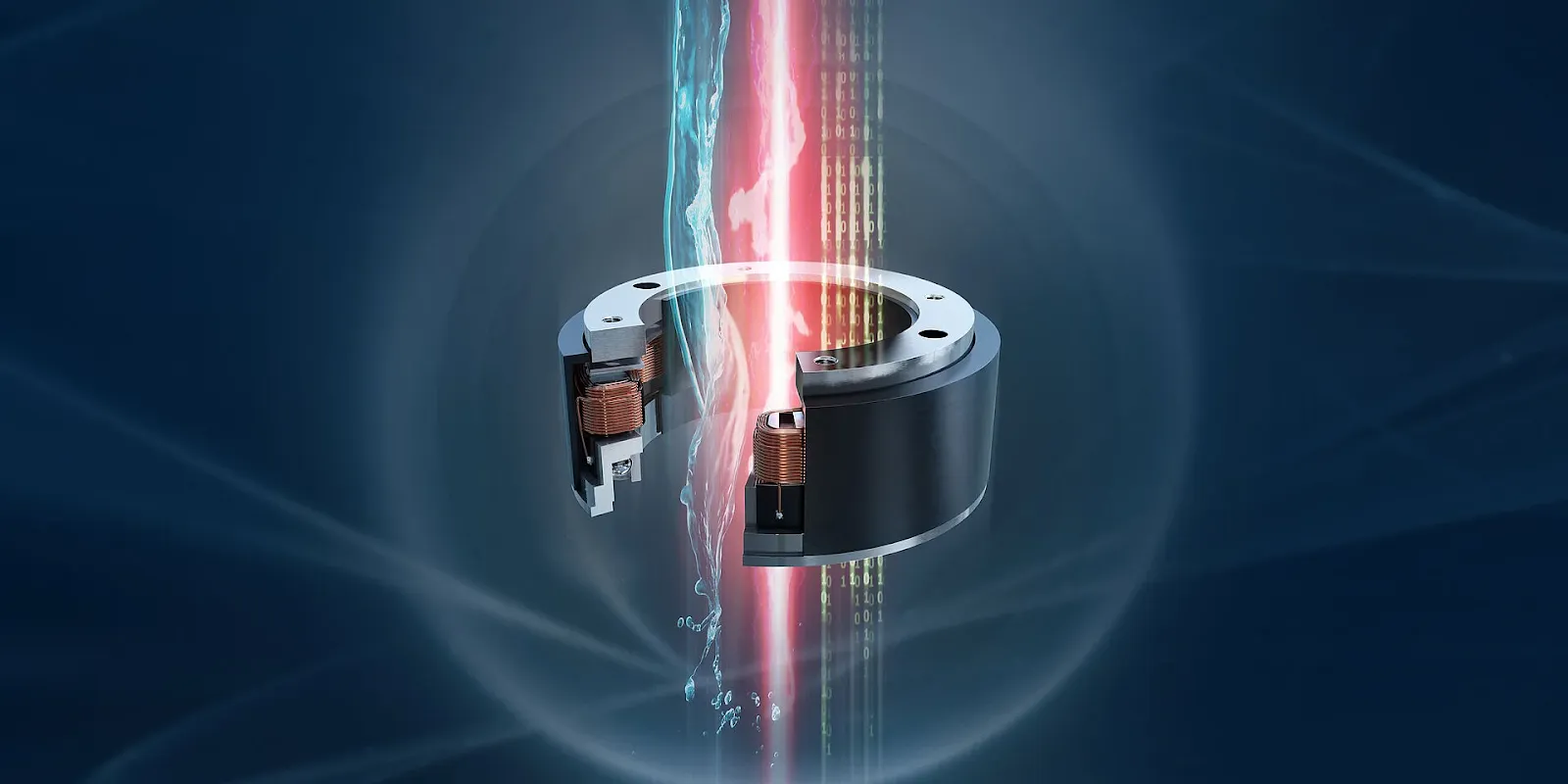
In contrast, a hollow shaft motor features a central bore that allows the motor to mount directly onto the driven shaft. While the shaft contains less material, its geometry is optimized to maintain torsional stiffness while enabling direct integration with the load.
Solid shafts prioritize brute mechanical strength, while hollow shafts prioritize smart structural integration.
2. Torque Transmission and Motion Performance
Torque transmission is another area where these two motor types differ significantly.
Solid shaft motors transmit torque through intermediate mechanical components such as couplings, pulleys, or gearboxes. This modular approach provides flexibility but introduces additional interfaces where energy losses, backlash, or vibration can occur.
Hollow shaft motors, on the other hand, enable direct torque transfer by eliminating these intermediates. The result is smoother motion, improved concentricity, and higher positioning accuracy, especially valuable in precision automation and linear motion systems.
Solid shaft systems offer adaptability, while hollow shaft systems deliver superior motion efficiency and control.
3. Installation Space and System Compactness
Space constraints often play a decisive role in motor selection.
Solid shaft motors generally require extra axial space due to the need for couplings or transmission components. This can increase machine length and complicate layout planning, particularly in compact production environments.
Hollow shaft motors significantly reduce system footprint by mounting directly onto the driven shaft. This design shortens the mechanical chain, reduces overall weight, and simplifies machine architecture, an important advantage in robotics and high-density automation lines.
When space is limited, hollow shaft motors clearly hold the advantage.
4. Maintenance, Alignment, and Long-Term Reliability
From a maintenance perspective, the differences become even more pronounced over time.
Solid shaft motors rely on multiple mechanical interfaces, each of which requires periodic inspection, alignment, and potential replacement. Misalignment in couplings is a common source of vibration and premature wear.
Hollow shaft motors minimize these risks by reducing the number of mechanical components. Direct mounting improves alignment accuracy and lowers the likelihood of mechanical failure, often resulting in lower maintenance demands and longer service intervals.
Solid shaft motors are easier to service component-by-component, while hollow shaft motors reduce maintenance by design.
5. Cost, Flexibility, and Total System Efficiency
Initial motor cost alone rarely tells the full story.
Solid shaft motors typically have a lower upfront price and work well with standardized components, making them a cost-effective choice for traditional industrial setups.
Hollow shaft motors may involve a higher initial investment, but they often reduce overall system cost by eliminating couplings, simplifying installation, and improving energy efficiency.
Solid shaft motors often win on unit cost, while hollow shaft motors excel in total cost of ownership (TCO).
There is no universally “better” option between solid shaft and hollow shaft motors, only the right choice for the right application.
Solid shaft motors remain a reliable solution for heavy-duty, adaptable, and cost-conscious systems. Hollow shaft motors, meanwhile, shine in compact, high-precision, and performance-driven environments.
Choosing wisely means looking beyond the motor itself and evaluating how the entire system will perform over time.
Advantages and Disadvantages of Hollow Shaft Motors
Hollow shaft motors are often seen as a modern solution for compact and high-precision motion systems. However, like any engineering choice, they come with both clear advantages and practical limitations that should be carefully evaluated before implementation.
Advantages of Hollow Shaft Motors
- Enable direct mounting onto the driven shaft, reducing or completely eliminating the need for couplings, belts, or intermediate transmission components
- Improve shaft alignment and concentricity, which helps minimize vibration, noise, and mechanical wear over time
- Support compact system design by shortening the mechanical chain and reducing overall machine length
- Enhance motion accuracy and responsiveness thanks to reduced backlash and fewer mechanical interfaces
- Lower long-term maintenance requirements by decreasing the number of wear-prone components
- Contribute to higher overall system efficiency by minimizing energy losses in mechanical transmission
Disadvantages of Hollow Shaft Motors
- Typically involve a higher initial motor cost compared to traditional solid shaft designs
- Require precise installation and mounting tolerances, making setup more demanding from a technical standpoint
- May be less suitable for extremely high radial or shock loads if not properly engineered for the application
- Offer less flexibility for post-installation mechanical adjustments compared to systems using external couplings
- Replacement or reconfiguration can be more complex if the motor is tightly integrated into the driven shaft
Taken together, hollow shaft motors deliver compelling benefits in terms of precision, compactness, and system efficiency, but they perform best when applied in the right context. Understanding both their strengths and limitations allows engineers and system designers to make informed decisions and fully leverage their advantages without introducing unnecessary risk.
How to Choose Between Solid and Hollow Shaft Motors
Choosing between a solid shaft motor and a hollow shaft motor is less about which design is superior and more about which one aligns best with your system requirements. A well-informed decision should consider not only motor specifications, but also installation conditions, long-term operation, and overall system efficiency.
- Start by evaluating load characteristics and torque requirements. Solid shaft motors are generally better suited for high-load or heavy-duty applications where mechanical strength and rigidity are critical, while hollow shaft motors perform best in systems that prioritize smooth torque transmission and precise motion control.
- Consider the available installation space and system layout. If your design allows for additional components such as couplings or gearboxes, a solid shaft motor offers flexibility. However, in compact machines or tightly integrated automation lines, a hollow shaft motor can significantly simplify the mechanical structure and reduce overall footprint.
- Assess the level of precision and alignment accuracy required. Applications involving positioning, indexing, or synchronized motion often benefit from hollow shaft motors due to their direct mounting capability and reduced misalignment risk. For less precision-sensitive systems, solid shaft motors remain a reliable and practical choice.
- Factor in maintenance strategy and operating lifecycle. Solid shaft motors make it easier to replace or modify individual mechanical components, which can be advantageous in evolving systems. Hollow shaft motors, on the other hand, reduce the number of wear points and can lower maintenance demands over long operating periods.
- Look beyond initial price and focus on total cost of ownership. While solid shaft motors typically have lower upfront costs, hollow shaft motors may deliver long-term savings through reduced installation time, fewer components, improved efficiency, and lower maintenance requirements.
Ultimately, the right choice comes from viewing the motor as part of a complete motion system rather than a standalone component. By aligning motor type with load conditions, space constraints, precision needs, and lifecycle costs, engineers can select a solution that delivers optimal performance, reliability, and value over time.
Conclusion
Choosing between solid shaft and hollow shaft motors is ultimately a strategic decision that shapes how an entire motion system performs, evolves, and endures over time. While solid shaft motors continue to deliver proven strength, flexibility, and reliability in traditional industrial environments, hollow shaft motors represent a more integrated and efficiency-driven approach for modern automation and precision applications.
Rather than asking which motor type is better, the more important question is which design best supports your operational goals, spatial constraints, and performance expectations. When shaft design aligns with real-world application requirements, the result is not only smoother motion and higher accuracy, but also lower maintenance effort and improved long-term efficiency.

