




Electromagnetic induction is one of the most fundamental principles behind how modern electrical and motion systems work, yet it often operates quietly in the background, unseen but indispensable. From electric motors and generators to precision linear motion systems used in industrial automation, this phenomenon enables the conversion of energy into controlled, reliable movement. Understanding what electromagnetic induction is, how it works, and why it matters provides critical insight into the technologies that power today’s high-performance machinery and next-generation motor solutions.
What Is Electromagnetic Induction?
Electromagnetic induction is a fundamental physical phenomenon in which an electric current or voltage is generated when a conductor is exposed to a changing magnetic field. In simple terms, whenever the magnetic environment around a conductive material changes, electrical energy is induced within that conductor. This principle forms the backbone of countless electrical and electromechanical systems used in modern industry.
At the core of electromagnetic induction is the interaction between three key elements: a magnetic field, a conductor (such as a wire or coil), and relative motion or variation between them. When a magnetic field moves across a conductor, or when the conductor moves through a magnetic field, the magnetic flux linking the conductor changes. This change in magnetic flux induces an electromotive force (EMF), which can drive an electric current if the circuit is closed.
The concept was first discovered and formalized by Michael Faraday in the 19th century, leading to what is now known as Faraday’s Law of Electromagnetic Induction. Faraday demonstrated that the magnitude of the induced voltage is directly related to how quickly the magnetic field changes. In engineering terms, faster changes in magnetic flux result in stronger induced electrical effects, a principle that directly influences motor speed, force generation, and energy efficiency.
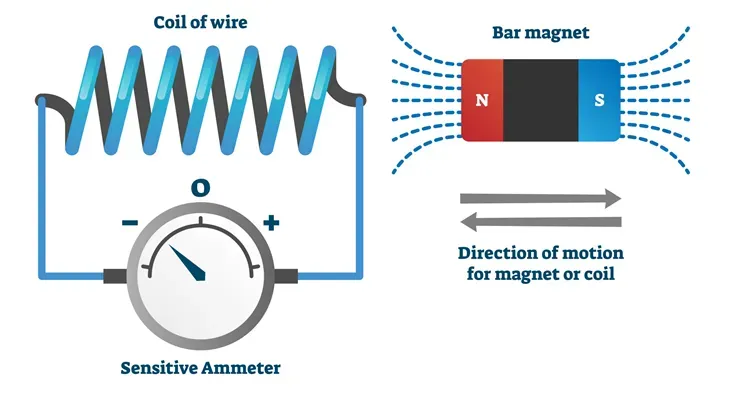
Unlike static electricity or direct electrical conduction, electromagnetic induction does not require physical contact between components. Energy transfer occurs through magnetic fields, making induction-based systems highly reliable and suitable for continuous operation. This non-contact nature is one of the reasons electromagnetic induction is widely used in motors, generators, transformers, and advanced motion systems where precision and durability are critical.
In modern engineering applications, electromagnetic induction is not just a theoretical concept, it is a practical mechanism for converting electrical energy into mechanical motion and vice versa. From traditional rotary motors to high-performance linear motors, the ability to control induced currents and magnetic fields enables precise force control, smooth motion, and efficient power usage across a wide range of industrial systems.
How Electromagnetic Induction Works
Electromagnetic induction occurs when a change in magnetic flux generates an electromotive force (EMF) within a conductor. Rather than relying on direct electrical contact, this process is driven by dynamic interactions between magnetic fields and conductive materials, allowing energy to be transferred efficiently and predictably.
The process begins with a magnetic field, typically produced by a permanent magnet or an electrically energized coil. When this magnetic field remains constant relative to a conductor, no electrical effect is produced. Induction only takes place when there is a change, either the magnetic field moves, the conductor moves, or the strength of the magnetic field varies over time. This change alters the magnetic flux passing through the conductor.
As the magnetic flux changes, an electromotive force is induced within the conductor. If the conductor is part of a closed circuit, this induced EMF causes electrons to move, creating an electric current. The faster the rate of change in magnetic flux, the greater the induced voltage. This relationship is central to electromagnetic system design, as it directly affects output power, responsiveness, and efficiency.
The direction of the induced current is governed by Lenz’s Law, which states that the induced current will flow in a direction that opposes the change in magnetic flux that produced it. In practical terms, this creates a natural balancing effect within electromagnetic systems, contributing to stability and controlled energy conversion in motors and actuators.
In electromechanical systems, electromagnetic induction enables the conversion between electrical and mechanical energy. In generators, mechanical motion creates changing magnetic fields that induce electrical energy. In motors and linear motion systems, controlled electrical currents generate changing magnetic fields that produce force and motion. This bidirectional energy conversion is what makes electromagnetic induction indispensable to modern motor technology.
For linear motors in particular, electromagnetic induction allows force to be generated without physical contact between moving components. By precisely controlling magnetic fields and induced currents, linear motors achieve high positioning accuracy, rapid acceleration, and smooth motion, key requirements in high-performance industrial automation and precision manufacturing environments.
Key Laws Governing Electromagnetic Induction
Electromagnetic induction is not a random phenomenon, it follows well-defined physical laws that allow engineers to predict, control, and optimize electrical and motion systems. These laws form the theoretical foundation behind motors, generators, transformers, and high-precision linear motor technologies.
1. Faraday’s Law: The Foundation of Electromagnetic Induction
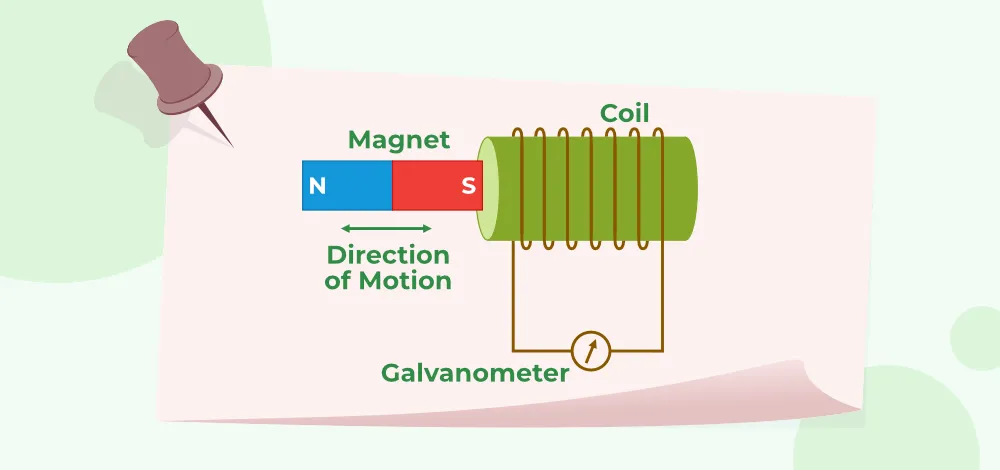
Faraday’s Law is the cornerstone of electromagnetic induction. It states that an electromotive force (EMF) is induced in a conductor whenever the magnetic flux linking that conductor changes over time. In essence, changing magnetic fields are the source of induced electrical energy.
From an engineering perspective, Faraday’s Law explains why faster motion, stronger magnetic fields, or higher coil density result in greater induced voltage. This relationship directly influences motor torque, linear motor thrust, and overall system efficiency. Designers use this principle to fine-tune performance by controlling how rapidly magnetic flux changes within a system.
At its core, Faraday’s Law transforms electromagnetic induction from a theoretical concept into a predictable engineering tool, one that enables precise energy conversion in both rotary and linear motion systems.
2. Magnetic Flux: The Key Variable Behind Induction
Magnetic flux represents the total magnetic field passing through a given area of a conductor or coil. While often overlooked, it is the critical variable that determines whether induction occurs at all.
Induction is not triggered by the presence of a magnetic field alone, but by a change in magnetic flux. This change can result from motion, variation in field strength, or changes in the orientation of the conductor relative to the magnetic field. Even small fluctuations in flux can generate measurable electrical effects in sensitive systems.
By carefully shaping magnetic fields and controlling flux paths, engineers can maximize induced voltage while minimizing losses. This is especially important in precision motor systems, where stable and predictable flux behavior ensures smooth motion and consistent force output.
3. Lenz’s Law: Nature’s Built-In Stability Mechanism
Lenz’s Law defines the direction of the induced current produced by electromagnetic induction. It states that the induced current will always oppose the change in magnetic flux that created it.
This opposing behavior may seem counterintuitive at first, but it plays a crucial role in system stability. In motors and actuators, Lenz’s Law prevents uncontrolled acceleration and excessive current buildup, helping maintain balanced operation under varying loads.
In practical motor design, Lenz’s Law contributes to smooth starts, controlled braking, and predictable dynamic response. It ensures that electromagnetic systems naturally resist sudden changes, a property that is invaluable in high-speed and high-precision linear motion applications.
4. Fleming’s Right-Hand Rule: Visualizing Induced Current Direction
Fleming’s Right-Hand Rule provides a simple yet powerful way to visualize the relationship between motion, magnetic fields, and induced current. By aligning the thumb, forefinger, and middle finger of the right hand, engineers can quickly determine the direction of induced current in a moving conductor.
While it may appear basic, this rule is extremely useful in practical design and troubleshooting. It helps engineers understand how conductor orientation and motion direction affect current flow within motors and generators.
In linear motor systems, Fleming’s Rule aids in conceptualizing force direction and current behavior, making it easier to design efficient and predictable motion architectures.
5. Energy Conservation in Electromagnetic Induction
Underlying all induction phenomena is the principle of energy conservation. Electromagnetic induction does not create energy, it converts energy from one form to another, whether from mechanical to electrical or vice versa.
The resistance described by Lenz’s Law ensures that additional energy input is always required to sustain motion or changing fields. This prevents energy from appearing spontaneously and enforces realistic performance limits within electromagnetic systems.
For engineers, this principle reinforces the importance of optimizing efficiency, managing heat generation, and reducing losses. In advanced linear motor designs, respecting energy conservation leads to smarter control strategies and more sustainable, high-performance motion solutions.
Taken together, these laws explain not only how electromagnetic induction occurs, but why it behaves in such a controlled and reliable manner. Faraday’s Law defines when induction happens, magnetic flux determines its strength, Lenz’s Law ensures stability, and practical rules like Fleming’s provide clarity in real-world design.
Types of Electromagnetic Induction
Electromagnetic induction can occur in different forms depending on how magnetic fields and electrical circuits interact. Each type plays a distinct role in electrical engineering and motor technology, contributing to the performance, efficiency, and control of modern electromechanical systems.
- Self-induction occurs when a changing current within a single conductor or coil induces a voltage in that same conductor. As the current increases or decreases, the magnetic field it generates also changes, creating an induced EMF that opposes the original current variation. This behavior is essential for understanding inductors, current regulation, and transient responses in motor windings and power electronics.
- Mutual induction takes place when a changing current in one coil induces a voltage in a nearby, separate coil through a shared magnetic field. This principle is the foundation of transformers and is widely used to transfer energy or signals without direct electrical contact. In motor and actuator systems, mutual induction enables controlled energy transfer between different parts of a magnetic circuit.
- Dynamic induction happens when a conductor physically moves through a magnetic field, causing a change in magnetic flux over time. This type of induction is central to generators and many motor systems, where mechanical motion directly leads to induced electrical effects. It explains how motion and electromagnetic force are tightly coupled in rotating and linear machines.
- Induction by varying magnetic fields occurs when the magnetic field strength itself changes over time, even if the conductor remains stationary. Alternating current (AC) systems rely heavily on this form of induction to produce continuous voltage and current oscillations. This mechanism is fundamental to AC motors, power transmission, and industrial automation systems.
- Eddy current induction arises when changing magnetic fields induce circulating currents within conductive materials. While often considered a source of energy loss and heat generation, eddy currents can also be harnessed for braking, damping, and non-contact motion control. In precision engineering, managing eddy currents is crucial for achieving stable and efficient performance.
Together, these types of electromagnetic induction illustrate the versatility of the phenomenon and its ability to adapt to a wide range of engineering challenges. By understanding how each form operates, engineers can design motor and motion systems that balance efficiency, precision, and reliability, especially in advanced linear motor applications where electromagnetic behavior must be carefully controlled.
Electromagnetic Induction in Linear Motor Technology
Electromagnetic induction plays a central role in linear motor technology by enabling force generation without physical contact between moving components. Instead of converting rotary motion into linear motion through mechanical transmissions, linear motors rely directly on controlled magnetic fields and induced currents to produce straight-line movement. This direct-drive approach significantly improves precision, responsiveness, and system reliability.
In a linear motor, electromagnetic induction occurs as electric current flows through coils, creating a dynamic magnetic field that interacts with permanent magnets or secondary conductive structures. The changing magnetic flux induces forces according to electromagnetic laws, producing linear thrust along the motor’s axis. By precisely controlling current magnitude, frequency, and phase, engineers can accurately regulate position, velocity, and acceleration.
One of the most significant advantages of electromagnetic induction in linear motor systems is the absence of mechanical contact such as gears, belts, or lead screws. This eliminates backlash, reduces friction, and minimizes wear over time. As a result, linear motors achieve smoother motion, higher repeatability, and longer operational life, key requirements in high-precision industrial applications.
Electromagnetic induction also enables rapid dynamic response in linear motors. Because force is generated directly through electromagnetic interaction, the system can accelerate and decelerate quickly without the inertia associated with mechanical transmission components. This makes linear motors especially suitable for applications requiring high speed, short cycle times, and precise synchronization.
From an efficiency standpoint, induction-based linear motor designs allow energy to be delivered exactly where and when it is needed. Advanced control algorithms manage magnetic flux and induced currents to optimize thrust while limiting heat generation and energy loss. This level of control is critical in demanding environments such as semiconductor manufacturing, automation systems, and precision positioning equipment.
Conclusion
Electromagnetic induction is far more than a fundamental theory of physics, it is the driving force behind modern electrical and motion technologies. From the basic interaction between magnetic fields and conductors to advanced linear motor systems, this principle enables precise energy conversion, controlled motion, and reliable performance across countless industrial applications.
By understanding how electromagnetic induction works and the laws that govern it, engineers gain the ability to design systems that are faster, more efficient, and more accurate. In linear motor technology, electromagnetic induction unlocks direct-drive motion, eliminating mechanical complexity while delivering exceptional precision and dynamic response.

