




In modern automation systems, achieving precise and reliable linear motion is a critical requirement across a wide range of industries. From semiconductor manufacturing and medical equipment to packaging and industrial automation, motion control accuracy directly impacts performance and efficiency.
A stepper motor linear actuator offers a practical solution by converting electrical pulses into controlled linear movement without the need for complex feedback systems. Thanks to its high positioning accuracy, repeatability, and cost-effective design, this type of actuator has become a popular choice for applications where precision, simplicity, and reliability are essential.
What Is a Stepper Motor Linear Actuator?
A stepper motor linear actuator is a type of linear motion device that combines a stepper motor with a mechanical transmission system to produce precise, incremental linear movement. Unlike conventional rotary motors that generate rotational motion, this actuator converts electrical input directly into controlled linear displacement, making it ideal for applications that require accurate positioning and repeatability.
At its core, a stepper motor linear actuator operates by receiving electrical pulses from a controller. Each pulse causes the motor to move a fixed step angle, which is then translated into a precise linear distance through a lead screw or ball screw mechanism. Because the movement is divided into discrete steps, the actuator can achieve highly predictable and repeatable positioning without relying on complex feedback systems.
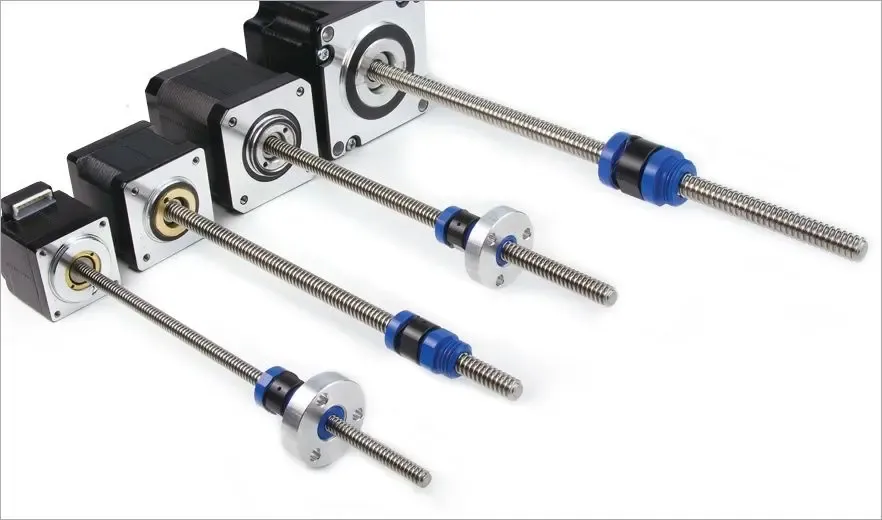
One of the defining characteristics of a stepper motor linear actuator is its open-loop control capability. In many applications, the actuator can maintain accurate positioning without encoders or sensors, reducing system complexity and cost. This makes stepper-based linear actuators particularly attractive for compact automation systems, laboratory equipment, and industrial machinery where simplicity and reliability are critical.
Stepper motor linear actuators are widely used in environments that demand precise linear positioning, stable holding force, and synchronized motion control. Their ability to deliver consistent thrust, maintain position at standstill, and integrate easily with standard motion controllers has made them a foundational component in modern linear motion and automation solutions.
How Does a Stepper Motor Linear Actuator Work?
A stepper motor linear actuator works by converting electrical control signals into precise, incremental linear motion. This process is based on the step-by-step rotation of a stepper motor and the mechanical transformation of that rotation into linear displacement through a screw mechanism.
When the controller sends a sequence of electrical pulses to the stepper motor, the motor’s rotor moves in discrete angular steps. Each pulse corresponds to a fixed step angle, allowing the motor to rotate with a high level of precision. This rotational movement is then transmitted to a lead screw or ball screw, which converts the rotary motion into linear movement of the nut or actuator shaft.
The linear travel distance of the actuator is directly related to two factors: the motor’s step angle and the screw lead (the linear distance traveled per full revolution). By precisely controlling the number and frequency of input pulses, the actuator can achieve accurate positioning, controlled speed, and repeatable motion without requiring complex feedback devices.
Stepper motor linear actuators typically operate in an open-loop control system, meaning position is determined by counting input pulses rather than measuring actual position with sensors. As long as the actuator operates within its load and speed limits, it can maintain accurate linear positioning with excellent repeatability. For applications requiring higher reliability or fault detection, encoders can be integrated to enable closed-loop operation.
Another important characteristic of stepper motor linear actuators is their high holding force at standstill. When energized, the motor can hold its position firmly without additional braking mechanisms, making it well-suited for vertical loads or applications where maintaining position is critical.
Overall, the working principle of a stepper motor linear actuator combines electrical pulse control, precise step motion, and mechanical conversion, resulting in a simple yet highly effective solution for precision linear motion in industrial and automation environments.
Advantages of Stepper Motor Linear Actuators
Stepper motor linear actuators are widely adopted in industrial and automation systems not only for their precision, but also for their simplicity, reliability, and cost efficiency. Below are the key advantages that make this linear motion solution a preferred choice across many applications.
1. High Positioning Accuracy and Excellent Repeatability
One of the most significant advantages of stepper motor linear actuators is their ability to deliver highly accurate and repeatable linear motion. Because movement is divided into discrete steps, each electrical pulse corresponds to a precise linear displacement.
This step-by-step control allows engineers to achieve consistent positioning over long operating cycles, even in applications that require frequent start-and-stop motion. As a result, stepper motor linear actuators are particularly effective in precision assembly, inspection systems, and automated positioning tasks where accuracy cannot be compromised.
2. Simple Control Without Complex Feedback Systems
Stepper motor linear actuators can operate effectively in open-loop control systems, meaning they do not always require encoders or additional position sensors to maintain accuracy. Position is determined by counting control pulses, which simplifies system architecture.
This simplicity reduces both system complexity and development time while lowering overall costs. For many industrial applications, this makes stepper-based linear actuators easier to integrate, commission, and maintain compared to more complex servo-driven alternatives.
3. Strong Holding Force at Standstill
Another key advantage is the high holding force that stepper motor linear actuators can provide when energized. Even when the actuator is not moving, it can maintain its position without the need for mechanical brakes or locking mechanisms.
This characteristic is especially valuable in vertical or load-bearing applications, where maintaining position is critical for safety and precision. The ability to hold loads securely enhances reliability and expands the range of applications where stepper motor linear actuators can be used.
4. Cost-Effective Solution for Precision Linear Motion
Compared to servo-based linear actuators, stepper motor linear actuators offer a more cost-effective solution while still delivering reliable precision. Their simpler control requirements and fewer feedback components help reduce both initial investment and long-term maintenance costs.
For manufacturers and system integrators seeking a balance between performance and budget, stepper motor linear actuators provide an efficient way to achieve accurate linear motion without unnecessary system complexity.
5. Flexible Design and Easy System Integration
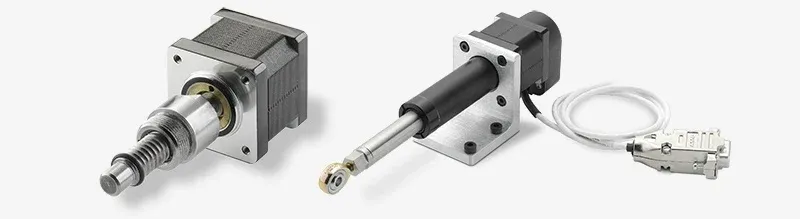
Stepper motor linear actuators are available in various configurations, including captive, non-captive, and external designs. This flexibility allows engineers to select the most suitable actuator based on space constraints, stroke length, and load requirements.
Additionally, their compatibility with standard motion controllers and automation platforms makes integration straightforward. This adaptability ensures that stepper motor linear actuators can be seamlessly incorporated into both new designs and existing automation systems.
By combining precision, simplicity, holding strength, cost efficiency, and design flexibility, stepper motor linear actuators offer a well-balanced linear motion solution for a wide range of industrial and automation applications. These advantages make them an ideal choice for engineers who require dependable performance without unnecessary complexity, especially in environments where precision and reliability are paramount.
Linear Actuator Attachment for Stepper Motors
A linear actuator attachment for stepper motors is designed to transform a standard rotary stepper motor into a precise and efficient linear motion device. By integrating mechanical transmission components directly with the motor, these attachments enable controlled linear movement while maintaining the inherent accuracy of stepper technology. Key characteristics and benefits include:
- Converts rotary motion from a stepper motor into smooth, controlled linear movement using lead screw or ball screw mechanisms.
- Maintains precise step-by-step positioning, allowing accurate linear displacement based on input pulses
- Offers compact and space-saving designs, ideal for applications with limited installation space
- Provides high mechanical efficiency and consistent thrust output across the stroke length
- Enables easy integration with existing stepper motors, reducing redesign effort and system cost
- Supports various configurations to match different load, speed, and stroke requirements
From a system design perspective, linear actuator attachments allow engineers to leverage the simplicity and reliability of stepper motors while expanding their functionality into linear motion applications. This modular approach not only improves design flexibility but also offers a cost-effective pathway to achieve precise linear movement without replacing the entire drive system.
Overall, linear actuator attachments serve as a practical and versatile solution for extending the capabilities of stepper motors, making them an attractive choice for automation systems that demand accuracy, adaptability, and efficient linear motion control.
Conclusion
Stepper motor linear actuators represent a reliable and efficient solution for applications that demand precise, repeatable linear motion without unnecessary system complexity. By combining accurate step control, strong holding force, and flexible design options, these actuators bridge the gap between performance and cost efficiency in modern automation systems. Whether used in industrial machinery, medical equipment, or precision manufacturing, stepper motor linear actuators offer a dependable foundation for controlled linear movement.
As automation requirements continue to evolve, selecting the right linear motion technology becomes increasingly important. With proven expertise in precision linear motion solutions, ITG Linear Motor provides stepper motor linear actuators that are engineered for reliability, adaptability, and long-term performance. Choosing the right actuator is not just about motion, it’s about optimizing efficiency, accuracy, and system success from the ground up.

