




In advanced motion engineering, choosing the wrong motor technology can compromise precision, stability, and even product integrity. While conventional linear motors dominate industrial automation, they are not designed to operate in vacuum or contamination-sensitive environments. This is where vacuum linear motors redefine performance standards. But what truly separates these two technologies? And how do their structural designs, thermal behaviors, and material selections impact real-world applications such as semiconductor manufacturing or ultra-high precision systems?
In this article, we break down the critical differences between vacuum linear motors and conventional linear motors to help engineers and system designers make the right decision with confidence.
What is a Linear Motor?
Before comparing vacuum and conventional designs, it’s essential to understand the fundamental technology behind both: the linear motor itself.
A linear motor is essentially an “unrolled” rotary motor. Instead of producing rotational torque around a shaft, it generates direct linear motion along a straight path. This eliminates the need for mechanical transmission components such as ball screws, belts, or gearboxes, resulting in higher precision, faster response, and reduced mechanical wear.
Linear motors operate based on Lorentz force, where a current-carrying conductor placed within a magnetic field experiences a force perpendicular to both the magnetic field and the current direction.
In practical terms:
- The stator (track) contains permanent magnets.
- The forcer (or coil assembly) carries controlled electrical current.
- The interaction between magnetic flux and current produces controlled linear force.
Because motion is generated directly, there is:
- No mechanical backlash
- No transmission compliance
- Minimal friction (especially in non-contact systems)
This makes linear motors ideal for high-precision positioning systems.
Main Types of Linear Motors
Although various configurations exist, the most common industrial types include:
1. Iron Core Linear Motors
- High force density
- Strong magnetic attraction between coil and magnet track
- Suitable for heavy-load industrial applications
2. Ironless (Coreless) Linear Motors
- No magnetic cogging
- Extremely smooth motion
- Ideal for ultra-precision systems
The choice between these types depends on force requirements, smoothness, and system dynamics.
Key Advantages of Linear Motors
Linear motors offer several performance benefits over traditional mechanical drive systems:
- High acceleration and velocity
- Exceptional positioning accuracy
- Reduced mechanical wear
- Lower maintenance requirements
- Clean and compact system architecture
These advantages explain why linear motors are widely used in semiconductor equipment, CNC systems, precision inspection platforms, and advanced automation.
What Is a Vacuum Linear Motor?
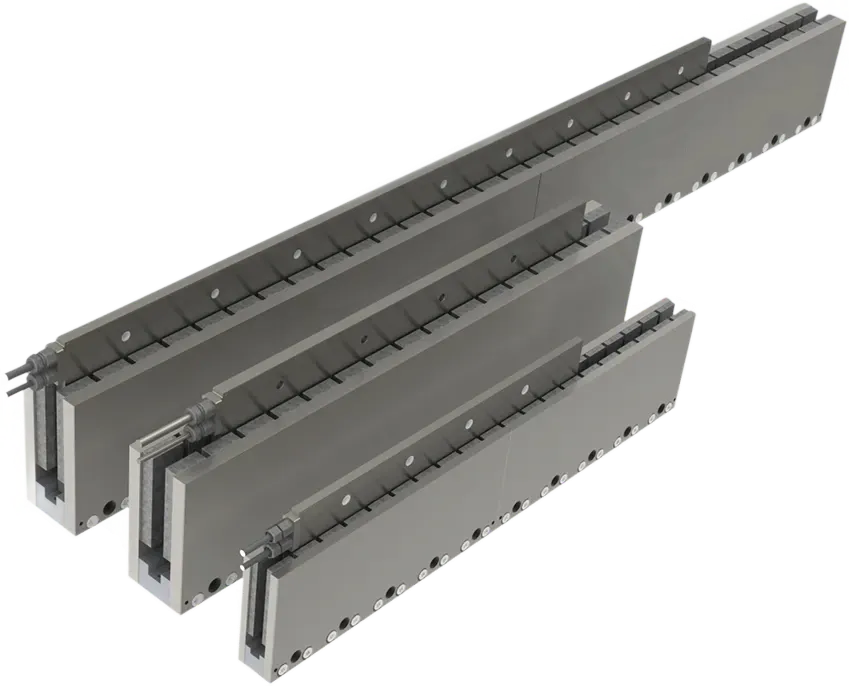
A vacuum linear motor is a specialized type of linear motor engineered to operate reliably inside vacuum environments, where traditional motor designs would fail due to material outgassing, thermal instability, or contamination risks.
While the fundamental operating principle remains the same, electromagnetic force generating direct linear motion, the engineering behind a vacuum linear motor is significantly more sophisticated. Every material, component, and assembly process must be carefully selected and validated to function in low-pressure or ultra-high vacuum (UHV) conditions.
What Makes It “Vacuum-Compatible”?
Operating in a vacuum eliminates air, which dramatically changes how systems behave. There is no convection cooling, lubricants evaporate, and many common industrial materials release trapped gases (a phenomenon known as outgassing). A vacuum linear motor addresses these challenges through:
- Low-outgassing materials: Specially selected metals, insulation systems, and adhesives that minimize molecular release.
- Vacuum-rated coil encapsulation: Windings are treated with vacuum-compatible resins to prevent gas emission and contamination.
- No lubricants or sealed alternatives: Conventional greases cannot survive in vacuum; dry or vacuum-stable solutions are required.
- Hermetic cable and connector systems: Prevent leakage and maintain chamber integrity.
- Cleanroom-compatible assembly processes: Ensuring particulate control for contamination-sensitive industries.
These modifications ensure stable performance without compromising the vacuum environment.
Structural and Thermal Design Differences
One of the biggest engineering challenges in vacuum environments is heat dissipation.
In atmospheric conditions, motors dissipate heat through convection. In vacuum, convection is eliminated, leaving only conduction and radiation as cooling mechanisms. As a result, vacuum linear motors often feature:
- Enhanced thermal conduction pathways
- Direct mounting to heat sinks or cooled machine structures
- Integrated liquid cooling systems (external to the vacuum chamber)
- Optimized electromagnetic design to reduce heat generation
Without proper thermal design, performance drift and long-term reliability issues can occur.
Vacuum linear motors are typically deployed in high-value, precision-critical industries, such as:
- Semiconductor wafer processing systems
- Lithography and inspection platforms
- Thin-film deposition equipment
- Space simulation chambers
- Scientific research instruments
In these applications, even microscopic contamination or thermal drift can compromise yield, accuracy, or experimental integrity.
Vacuum Linear Motors vs Conventional Linear Motors
Although both technologies rely on the same electromagnetic principle to generate direct linear motion, their engineering philosophy, material selection, and environmental capabilities are fundamentally different. The distinction becomes critical when precision, cleanliness, and thermal stability are non-negotiable.
Below is a structured comparison highlighting the most important differences.
1. Environmental Compatibility
Conventional Linear Motors
- Designed for operation in atmospheric environments
- Suitable for factory floors, automation systems, CNC machines
- Not engineered to function in vacuum chambers
- Materials may release gases (outgassing) under low pressure
Vacuum Linear Motors
- Specifically engineered for low, high, or ultra-high vacuum environments
- Built with vacuum-compatible materials and processes
- Minimized outgassing to protect sensitive manufacturing processes
- Often cleanroom compliant
If the application operates inside a sealed vacuum chamber, a conventional motor is not a viable option.
2. Thermal Management
One of the most critical differences lies in heat dissipation.
Conventional Linear Motors
- Rely heavily on air convection for cooling
- May use air cooling or standard liquid cooling systems
- Thermal performance assumes atmospheric pressure
Vacuum Linear Motors
- Cannot rely on convection (no air present)
- Use conduction-based thermal pathways
- Often integrate advanced cooling strategies
- Designed to minimize heat generation and thermal drift
In vacuum environments, improper thermal design can lead to instability, positioning errors, and reduced lifespan.
3. Material Selection and Construction
Conventional Linear Motors
- Standard industrial epoxies and insulation
- Conventional cable assemblies
- Lubricated mechanical interfaces
Vacuum Linear Motors
- Low-outgassing metals, resins, and insulation systems
- Hermetically sealed cables and connectors
- No volatile lubricants
- Clean assembly processes to prevent particulate contamination
Material science becomes a defining factor in vacuum-compatible design.
4. Performance Stability
Both motor types can achieve high precision, but environmental conditions affect long-term performance.
Conventional Motors
- High precision in standard industrial settings
- Possible thermal drift under sealed or high-heat conditions
Vacuum Motors
- Designed for ultra-stable positioning
- Reduced contamination risk
- Greater reliability in extreme environments
- Optimized for semiconductor-grade precision systems
In contamination-sensitive manufacturing, even microscopic instability can impact yield.
5. Cost and Engineering Complexity
Conventional Linear Motors
- Lower initial cost
- Easier integration
- Widely available standard configurations
Vacuum Linear Motors
- Higher engineering complexity
- Custom design often required
- Higher initial investment
- Critical for high-value applications
While vacuum motors demand greater upfront investment, they prevent costly system failures in high-tech environments.
The key difference is not in how they move, but in where they can move reliably.
Conventional linear motors excel in open-air industrial automation. Vacuum linear motors are purpose-built for controlled, contamination-sensitive, and pressure-restricted environments where standard designs simply cannot operate.
When Should You Choose a Vacuum Linear Motor?
Choosing a vacuum linear motor is not simply a technical upgrade, it is a necessity when environmental conditions and performance expectations exceed the limits of conventional motion systems. The decision typically begins with one critical question: will the motor operate inside a vacuum or contamination-sensitive environment? If the answer is yes, a vacuum-compatible design is no longer optional but essential.
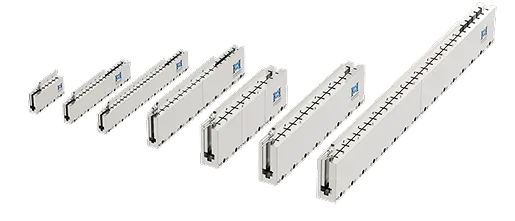
A vacuum linear motor becomes the right choice when the system operates inside low, high, or ultra-high vacuum chambers where air convection is absent and material outgassing can compromise process integrity. In semiconductor manufacturing, for example, even microscopic molecular contamination can affect wafer yield and device performance. Standard insulation materials, adhesives, or lubricants used in conventional motors may release gases under reduced pressure, making them unsuitable for such environments.
Thermal stability is another decisive factor. In vacuum conditions, heat cannot dissipate through air convection. If the application involves continuous high-speed motion, rapid acceleration, or sustained force output, improper heat management can lead to positioning drift and reduced reliability. Vacuum linear motors are specifically engineered with conduction-based thermal pathways and optimized electromagnetic efficiency to maintain stable performance under these constraints.
You should also consider a vacuum linear motor when your application demands ultra-high precision with minimal vibration and long-term repeatability. Advanced inspection platforms, lithography systems, and thin-film deposition equipment rely on nanometer-level accuracy. In these cases, environmental stability and contamination control are just as important as force and speed specifications.
Finally, high-value production environments justify the investment. When system downtime, yield loss, or contamination risks translate into significant financial impact, the higher upfront engineering cost of a vacuum linear motor becomes a strategic decision rather than an expense. It ensures process integrity, protects product quality, and delivers reliable motion performance where conventional linear motors simply cannot operate safely.
Conclusion
At first glance, vacuum linear motors and conventional linear motors may appear to share the same technological DNA, both delivering direct-drive motion through electromagnetic force. However, their true differences emerge where performance meets environment. Conventional linear motors excel in open industrial settings, offering speed, efficiency, and cost-effective integration. Vacuum linear motors, on the other hand, are engineered for a far more demanding reality, where contamination control, thermal stability, and ultra-precise positioning are mission-critical.
The decision is not about which motor is “better” in general, but which motor is engineered for your operating conditions. In atmospheric automation systems, a conventional solution may deliver everything you need. But inside vacuum chambers, semiconductor platforms, or high-precision research environments, only a purpose-built vacuum linear motor can ensure reliability without compromising process integrity.

