




Linear induction motors (LIMs) have become a key technology behind many modern motion systems, from high-speed transportation to advanced industrial automation. Unlike conventional rotary motors that rely on mechanical components to convert rotation into motion, LIMs generate direct linear movement through electromagnetic interaction. At the heart of this technology lies a fascinating physical phenomenon: the electromagnetic forces created when a moving magnetic field interacts with induced currents in a conductive surface.
Understanding how these electromagnetic forces work is essential for engineers, designers, and manufacturers who want to optimize performance, efficiency, and reliability in linear motion systems. This article explores the fundamental principles behind electromagnetic forces in a linear induction motor, how they generate thrust, and the factors that influence their effectiveness in real-world applications.
What Is a Linear Induction Motor?
A Linear Induction Motor (LIM) is an electric motor designed to produce direct linear motion instead of rotational movement. Unlike conventional induction motors that rotate a shaft, a LIM generates a traveling magnetic field that moves along a straight path, pushing a conductive secondary element forward through electromagnetic interaction. This unique capability eliminates the need for mechanical components such as gears, belts, or lead screws to convert rotational motion into linear movement.
Because of this design, linear induction motors are widely used in applications where smooth, contactless, and high-speed linear motion is required. Industries such as automation, transportation, material handling, and robotics increasingly rely on LIM technology to achieve higher efficiency, reduced maintenance, and precise motion control.
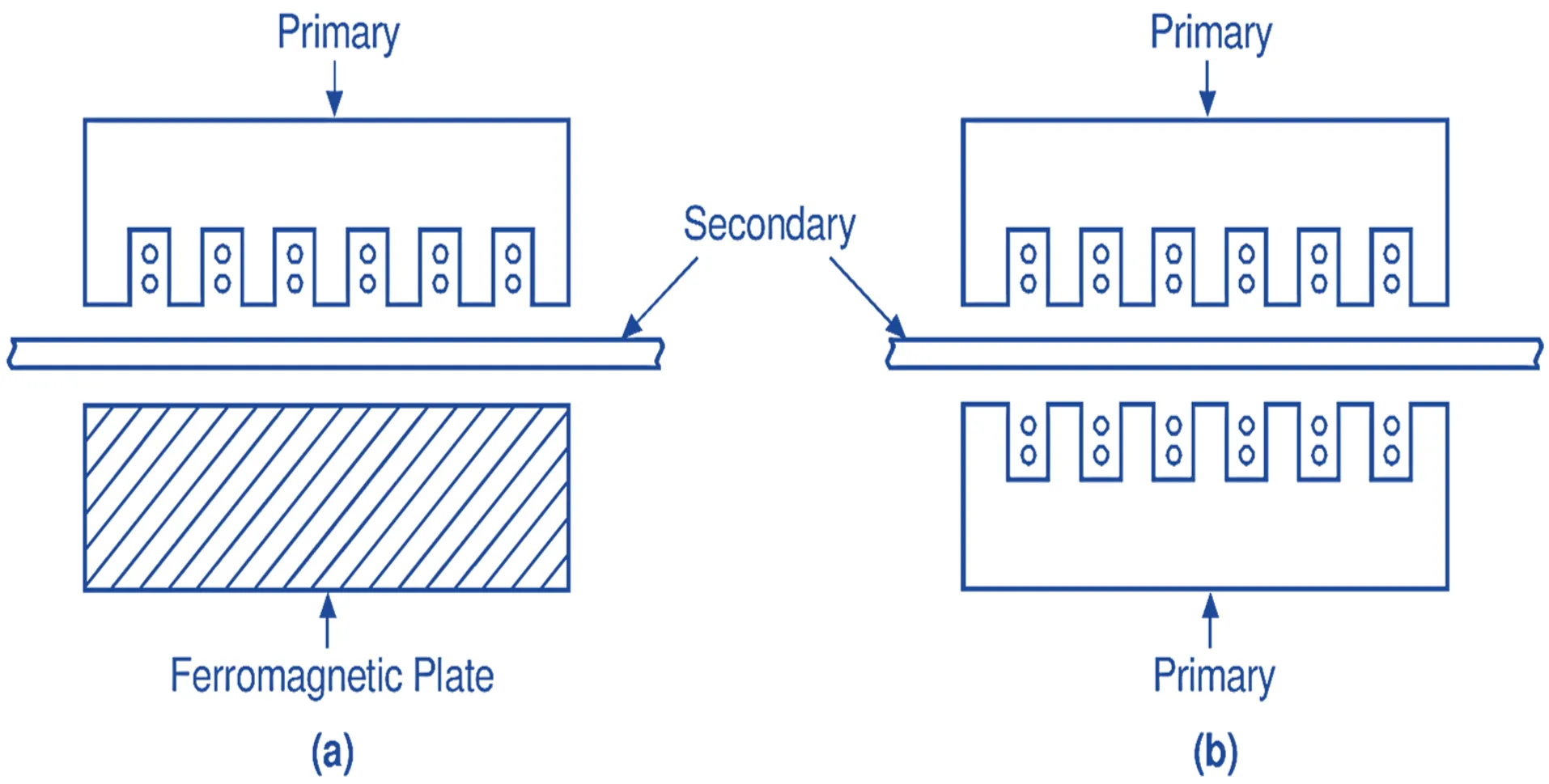
Basic Working Principle
The operation of a linear induction motor is based on the same electromagnetic principles as a traditional induction motor, but with a key structural difference. Instead of a circular stator and rotor arrangement, the motor is essentially “unrolled” into a flat structure that produces motion along a straight line.
When alternating current (AC) flows through the primary windings, it generates a traveling magnetic field along the length of the motor. This moving magnetic field passes over a conductive secondary plate, often made of aluminum or copper, known as the reaction plate.
As the magnetic field moves, it induces eddy currents within the secondary conductor according to electromagnetic induction principles. These induced currents then interact with the original magnetic field, creating electromagnetic forces that push the secondary element in the same direction as the traveling magnetic field. The result is a thrust force that drives linear motion without direct mechanical contact.
This electromagnetic interaction is what allows LIM systems to operate efficiently in environments where conventional mechanical systems may experience wear, friction, or mechanical complexity.
Main Components of a Linear Induction Motor
A linear induction motor consists of several key components that work together to generate electromagnetic propulsion:
- Primary (Stator): The primary contains the electrical windings and laminated magnetic core. When energized with AC power, it produces the traveling magnetic field responsible for generating motion.
- Secondary (Reaction Plate): The secondary is typically a conductive metal plate mounted on the moving object or track. It does not require electrical connections because the current within it is induced by the magnetic field of the primary.
- Air Gap: The air gap is the physical space between the primary and the secondary. Maintaining an optimal air gap is critical because it directly influences magnetic coupling, thrust force, and overall efficiency.
- Magnetic Core: Laminated steel cores help guide and concentrate the magnetic flux generated by the windings, improving the efficiency and strength of the magnetic field.
Each of these components plays a crucial role in ensuring that electromagnetic forces are generated effectively and that the motor delivers stable, efficient linear motion.
Differences Between Linear and Rotary Induction Motors
Although both LIMs and traditional induction motors rely on electromagnetic induction, their design and motion characteristics differ significantly.
- Type of Motion: Rotary induction motors produce rotational movement around a shaft, while linear induction motors generate motion along a straight path.
- Mechanical Complexity: Conventional systems often require additional mechanical components such as gears, belts, or screw drives to convert rotation into linear movement. LIMs eliminate this requirement by producing linear motion directly.
- Maintenance Requirements: With fewer moving mechanical parts and less physical contact, linear induction motors typically experience reduced wear and lower maintenance demands.
- Performance in Automation Systems: LIMs can provide faster acceleration, smoother motion, and higher positioning accuracy, making them particularly suitable for modern automation and transportation technologies.
By transforming the traditional induction motor into a system capable of producing direct linear propulsion, linear induction motors offer an efficient and elegant solution for many high-performance motion applications. Understanding their structure and working principles provides the foundation for exploring how electromagnetic forces generate thrust and control movement in these advanced motor systems.
Understanding Electromagnetic Forces in LIM
Electromagnetic forces are the fundamental mechanism that allows a linear induction motor to generate motion. Unlike mechanical drive systems that rely on physical contact between moving parts, a LIM produces thrust through the interaction between magnetic fields and electric currents. This contactless method of motion generation not only improves efficiency but also reduces mechanical wear, making linear induction motors highly suitable for modern industrial and transportation applications.
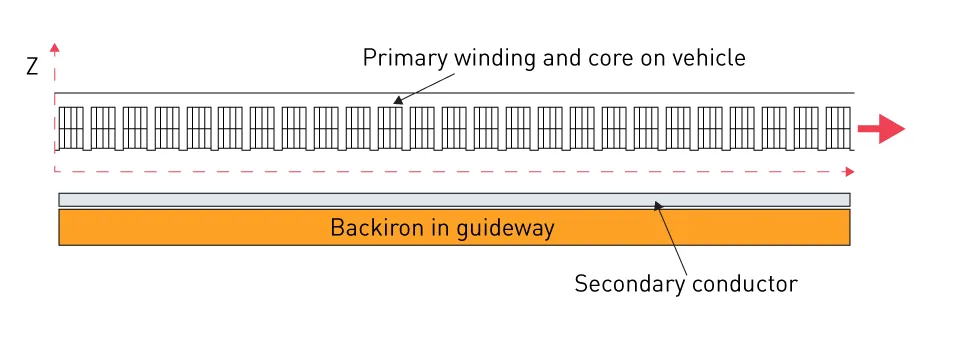
The process begins when alternating current flows through the primary windings of the motor. This current generates a magnetic field that does not remain stationary but instead moves along the length of the motor. Known as a traveling magnetic field, this phenomenon is crucial because it creates the dynamic environment necessary for electromagnetic interaction. As the magnetic field moves forward, it passes across the conductive secondary plate, typically made from aluminum or copper.
When the moving magnetic field intersects with the conductive surface of the secondary plate, it induces circulating electrical currents known as eddy currents. These currents are generated due to electromagnetic induction, where a changing magnetic field produces an electric current within a conductor. The presence of these induced currents then leads to another important interaction: the currents within the secondary conductor create their own magnetic field.
The combination of the original magnetic field from the primary windings and the induced magnetic field from the eddy currents results in an electromagnetic interaction that produces force. According to the fundamental principles of electromagnetism, when a current-carrying conductor is placed within a magnetic field, it experiences a force.
Understanding these electromagnetic interactions is essential for engineers and designers working with linear motor technology. By optimizing magnetic field strength, electrical parameters, and mechanical design, it becomes possible to maximize thrust generation, improve energy efficiency, and enhance the reliability of linear induction motor systems across a wide range of industrial and technological applications.
Key Factors Affecting Electromagnetic Force in LIM
The performance of a linear induction motor largely depends on how effectively electromagnetic forces are generated and transferred between the primary and secondary components. While the fundamental principle of force generation remains the same, several technical factors can significantly influence the magnitude, stability, and efficiency of the electromagnetic thrust produced in a LIM system.
Understanding these factors is essential for engineers and system designers who aim to optimize linear motor performance in industrial and transportation applications.
1. Air Gap Distance
One of the most critical factors affecting electromagnetic force in a linear induction motor is the air gap distance between the primary winding and the secondary reaction plate. The air gap determines how efficiently the magnetic field produced by the primary can interact with the conductive secondary surface.
A smaller air gap generally leads to stronger magnetic coupling, allowing the magnetic field to induce larger eddy currents in the secondary conductor. This results in a greater electromagnetic force and higher thrust output. However, reducing the air gap too much may introduce mechanical challenges, such as alignment sensitivity and the risk of physical contact between components. Therefore, maintaining an optimal air gap is crucial for balancing performance, stability, and system safety.
2. Electrical Frequency
The frequency of the alternating current supplied to the primary winding also plays an important role in determining the characteristics of the traveling magnetic field. Higher electrical frequencies cause the magnetic field to move faster along the length of the motor, which can influence both the speed and magnitude of the generated electromagnetic forces.
In practical applications, engineers must carefully select the operating frequency to match the desired motion characteristics of the system. While higher frequencies can enable faster motion, they may also increase losses due to heating and reduced magnetic efficiency. Proper frequency control helps maintain an effective balance between thrust generation, energy consumption, and operational stability.
3. Secondary Material Properties
The physical and electrical properties of the secondary conductor have a direct impact on how effectively eddy currents are generated. Materials with high electrical conductivity, such as aluminum or copper, allow stronger induced currents to form when exposed to the traveling magnetic field.
In addition to conductivity, the thickness of the reaction plate also affects electromagnetic performance. If the plate is too thin, it may not support sufficient current flow to generate strong forces. On the other hand, excessively thick materials can increase weight and cost without delivering significant performance improvements. Engineers therefore need to carefully select the appropriate material and thickness to achieve optimal force generation and efficiency.
4. Slip and Motor Efficiency
Another important factor influencing electromagnetic force in a LIM is slip, which refers to the difference between the speed of the traveling magnetic field and the actual speed of the secondary conductor. Slip is necessary for electromagnetic induction to occur because the relative motion between the magnetic field and the conductor generates the eddy currents responsible for thrust.
At low slip values, the induced currents are relatively small, resulting in weaker electromagnetic forces. As slip increases, the induced currents become stronger, leading to higher thrust generation. However, excessive slip can reduce overall efficiency because more electrical energy is converted into heat rather than useful mechanical motion.
For this reason, efficient LIM operation requires maintaining slip within an optimal range where sufficient thrust is generated while minimizing energy losses. Proper control of operating conditions, electrical supply, and system design plays a key role in achieving this balance.
By carefully optimizing factors such as air gap distance, electrical frequency, material properties, and slip, engineers can significantly enhance the performance of linear induction motors. These considerations are essential for maximizing electromagnetic force generation and ensuring reliable operation in demanding applications such as automated manufacturing systems, high-speed transport technologies, and advanced motion control platforms.
Applications of Linear Induction Motors
Linear induction motors have become an essential technology in many modern industries because they can generate direct linear motion without complex mechanical transmission systems.
Their ability to deliver smooth propulsion, high acceleration, and reliable operation makes them particularly valuable in environments where precision, speed, and reduced maintenance are critical. As automation and advanced transportation systems continue to evolve, the range of LIM applications is expanding rapidly across multiple sectors.
- Industrial automation and smart manufacturing: In automated factories, linear induction motors are widely used in conveyor systems, assembly lines, and material handling equipment. Because they can move loads smoothly and precisely along production lines, LIMs help manufacturers increase production efficiency while minimizing mechanical wear and maintenance downtime.
- High-speed transportation systems: One of the most impressive uses of LIM technology is in transportation infrastructure. Linear induction motors power advanced systems such as automated metro trains and magnetic levitation transport. Their ability to generate strong propulsion forces without direct mechanical contact allows vehicles to accelerate smoothly and operate reliably even at high speeds.
- Automated warehousing and logistics: Modern warehouses increasingly rely on automated systems to move goods quickly and efficiently. Linear induction motors enable high-speed shuttle systems, automated storage platforms, and smart logistics conveyors that can transport packages or pallets across large facilities with remarkable precision and minimal mechanical complexity.
- Robotics and precision motion control: In robotics and precision engineering environments, LIM technology supports high-speed positioning systems and contactless motion platforms. Because electromagnetic propulsion eliminates friction-based mechanical components, systems can achieve faster response times, smoother motion profiles, and higher positioning accuracy.
- Amusement rides and entertainment systems: Linear induction motors are also widely used in modern roller coasters and launch systems. Instead of traditional chain lifts, LIM-powered launch mechanisms can accelerate rides rapidly and smoothly, creating thrilling experiences while maintaining high levels of reliability and safety.
From automated factories to high-speed transit networks, linear induction motors are transforming how motion systems are designed and operated. Their versatility, efficiency, and ability to generate contactless propulsion continue to open new opportunities for innovation in industries that demand faster, smarter, and more reliable motion technologies.
Linear Motor Solutions from ITG Linear Motor
As industries continue to move toward smarter automation and higher-precision motion systems, the demand for reliable and efficient linear motor technology is growing rapidly. ITG Linear Motor focuses on developing advanced linear motor solutions designed to meet the performance requirements of modern industrial applications.
By combining strong engineering expertise with a deep understanding of electromagnetic motion principles, the company provides technologies that support stable thrust generation, smooth linear movement, and efficient energy utilization.
ITG Linear Motor solutions are designed to integrate seamlessly into a wide range of systems, including automated production lines, precision motion platforms, and advanced transportation mechanisms.
With an emphasis on performance, durability, and engineering flexibility, these systems help manufacturers and technology developers build motion platforms that are both efficient and reliable. As linear motor technology continues to evolve, solutions from ITG contribute to enabling more responsive, scalable, and intelligent motion systems across many industrial sectors.
Conclusion
Electromagnetic forces are the driving power behind the remarkable capabilities of linear induction motors. By harnessing the interaction between traveling magnetic fields and induced currents, LIM technology is able to produce smooth, efficient, and contactless linear motion, eliminating many of the mechanical limitations found in traditional motion systems.
This unique operating principle allows linear induction motors to deliver high acceleration, reduced maintenance requirements, and reliable performance across a wide range of demanding environments.
Understanding how electromagnetic forces are generated, controlled, and optimized within a LIM system is essential for engineers, designers, and technology developers who aim to build high-performance motion platforms. From industrial automation and logistics systems to advanced transportation and precision engineering applications, linear induction motors continue to demonstrate their value as a powerful solution for modern motion challenges.