




Brushless DC motors are quietly powering the modern world, from industrial automation and robotics to electric vehicles and high-precision motion systems. Yet behind their smooth, efficient performance lies a control mechanism far more sophisticated than traditional DC motors.
Unlike brushed motors, BLDC motors rely entirely on electronic commutation and an Electronic Speed Controller (ESC) to function. So how exactly does a Brushless DC motor work, and why is the ESC so critical to its operation? In this article by ITG, we break down the working principle of BLDC motors, explain the role of ESCs in controlling speed and torque, and uncover why this motor technology has become the backbone of high-performance motion control systems.
What Is a Brushless DC Motor (BLDC)?
A Brushless DC Motor (BLDC) is an electric motor that operates without mechanical brushes to transfer electrical power. Instead of using carbon brushes and a commutator like traditional DC motors, a BLDC motor relies on electronic commutation to control current flow through its windings. This fundamental difference allows BLDC motors to achieve higher efficiency, better reliability, and significantly longer service life.
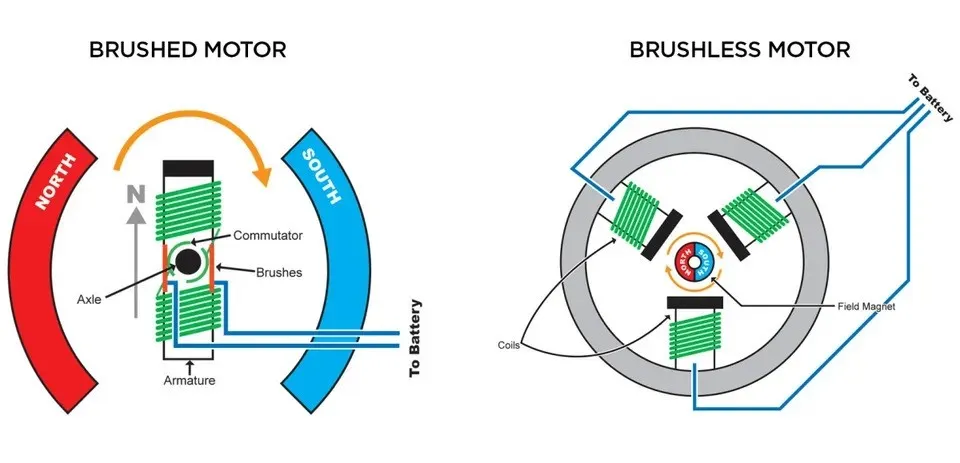
At its core, a BLDC motor converts electrical energy into mechanical motion through the interaction between a permanent magnet rotor and an electromagnet stator. The stator consists of multiple windings arranged in phases, while the rotor is typically embedded with strong permanent magnets. By precisely energizing these stator windings in a controlled sequence, a rotating magnetic field is created, which pulls the rotor along and produces continuous motion.
What truly defines a BLDC motor is the absence of physical contact between moving electrical components. In brushed DC motors, brushes constantly rub against the commutator, causing friction, electrical noise, heat, and gradual wear. BLDC motors eliminate this issue entirely by shifting the commutation process to an external electronic controller. As a result, energy losses are reduced, maintenance requirements are minimized, and operational stability is greatly improved.
Another defining characteristic of BLDC motors is their need for electronic control from the very start. Unlike brushed motors that can run simply by applying a DC voltage, a BLDC motor cannot operate on its own without a control system to manage switching, timing, and rotor position. This is where the Electronic Speed Controller (ESC) becomes an essential component, acting as the brain that orchestrates motor operation, a concept that will be explored in detail in the following sections.
Thanks to their efficiency, precision, and durability, BLDC motors are widely used in applications where performance and reliability matter most. They are commonly found in industrial automation, robotics, CNC machinery, electric vehicles, HVAC systems, and advanced motion control solutions, including linear motor and actuator systems. In these environments, BLDC motors provide the controllability and consistency that modern high-performance systems demand.
How Does a Brushless DC Motor Work?
Understanding how a Brushless DC motor works requires looking beyond simple rotation and diving into how magnetic fields, electronic switching, and precise timing work together. Unlike traditional motors that rely on physical contact for commutation, BLDC motors are driven entirely by controlled electromagnetic interactions. Let’s break this process down step by step.
1. Creating a Rotating Magnetic Field in the Stator
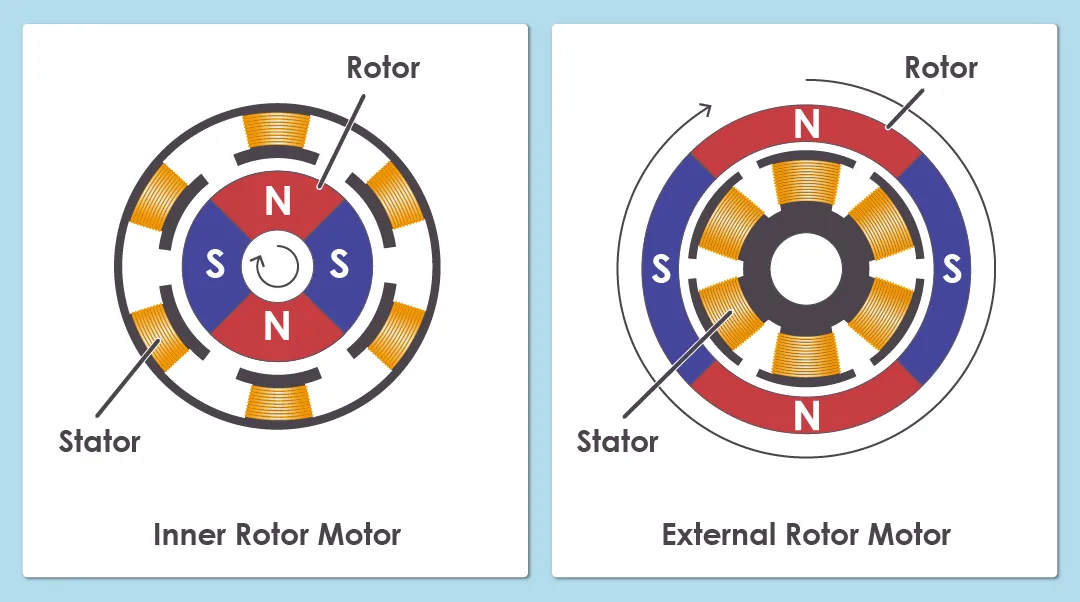
At the heart of every BLDC motor is the stator, which contains multiple windings arranged in phases. When electrical current flows through these windings in a specific sequence, each phase generates a magnetic field. Individually, these magnetic fields are static, but when energized sequentially, they combine to form a rotating magnetic field.
This rotating field is what initiates motion. Instead of physically pushing the rotor, the stator’s magnetic field continuously “pulls” it forward. The smoother and more precisely controlled this magnetic rotation is, the more stable and efficient the motor becomes. This principle allows BLDC motors to deliver consistent torque with minimal vibration.
By the end of this stage, the motor has established the fundamental condition for motion: a magnetic environment that can guide the rotor smoothly and predictably.
2. Rotor Alignment and Torque Generation
The rotor in a BLDC motor is embedded with permanent magnets, typically arranged in alternating north and south poles. As the stator’s magnetic field rotates, the rotor naturally attempts to align itself with this moving field due to magnetic attraction and repulsion forces.
This continuous realignment generates torque. Every time the stator field shifts position, the rotor follows, resulting in rotational motion. Unlike brushed motors, where torque fluctuates due to mechanical switching, BLDC motors maintain a much more uniform torque profile.
The result is not just rotation, but controlled, efficient rotation. This smooth torque generation is one of the reasons BLDC motors excel in precision-driven applications such as robotics, CNC systems, and motion control platforms.
3. Electronic Commutation Replaces Mechanical Brushes
In a brushed DC motor, commutation is handled mechanically by brushes and a commutator. BLDC motors remove this entire mechanism and replace it with electronic commutation. Instead of physical contact, semiconductor switches inside the controller determine which stator windings are energized, and exactly when.
This electronic switching is synchronized with the rotor’s position, ensuring that magnetic forces are always applied in the optimal direction. By eliminating brushes, BLDC motors avoid friction, sparking, and wear, leading to higher efficiency and dramatically longer lifespan.
At this point, the motor is no longer limited by mechanical constraints. Its performance becomes a function of control precision rather than component wear.
4. Rotor Position Detection and Timing Control
For electronic commutation to work, the system must know the rotor’s position at all times. This can be achieved in two primary ways: using Hall-effect sensors embedded in the motor, or through sensorless control that detects back electromotive force (back EMF).
Accurate rotor position information allows the controller to time each phase transition perfectly. If the timing is too early or too late, efficiency drops and torque ripple increases. When timing is precise, the motor runs smoothly, quietly, and with optimal power usage.
This intelligent timing control is what transforms a BLDC motor from a simple rotating device into a highly responsive and controllable motion component.
5. Continuous Feedback Creates Smooth and Efficient Motion
Once the cycle of magnetic field generation, rotor alignment, and electronic commutation is established, the BLDC motor operates in a continuous feedback loop. The controller constantly adjusts switching timing, voltage, and current based on load conditions and speed requirements.
This closed-loop behavior allows BLDC motors to adapt instantly to changes, whether it’s increased load, rapid acceleration, or precise speed regulation. The result is motion that feels effortless yet highly controlled, even under demanding operating conditions.
By the end of this process, the BLDC motor is no longer just spinning, it is responding, adapting, and performing with remarkable efficiency.
A Brushless DC motor works by combining rotating magnetic fields, permanent magnet alignment, and electronically controlled commutation into a seamless system. Every component, from the stator windings to the control logic, plays a critical role in delivering smooth, reliable, and high-performance motion. This intelligent design is why BLDC motors have become the foundation of modern industrial automation and advanced motion control solutions.
What Is an ESC (Electronic Speed Controller)?
An Electronic Speed Controller (ESC) is a critical electronic device that enables a Brushless DC motor to operate by controlling how electrical power is delivered to the motor windings. Unlike brushed motors, which can run simply by applying a DC voltage, a BLDC motor depends entirely on an ESC to manage commutation, speed, torque, and direction. Without an ESC, a BLDC motor cannot start or sustain rotation.
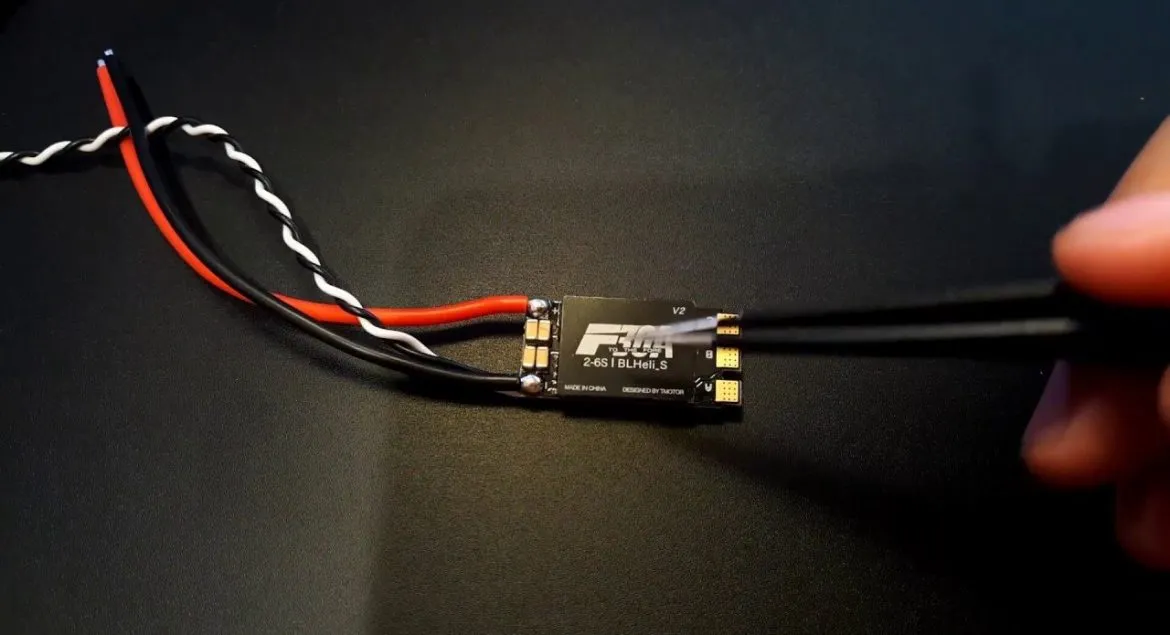
At its core, an ESC acts as the intermediary between the power source and the motor. It receives a DC input, typically from a power supply or battery, and converts it into a precisely timed, three-phase output that drives the stator windings. By switching power electronically across different phases in a specific sequence, the ESC creates the rotating magnetic field required for motor operation. This process replaces the mechanical role of brushes and commutators with fast, accurate electronic control.
Beyond basic commutation, an ESC continuously regulates motor speed by adjusting voltage and current using Pulse Width Modulation (PWM). By varying the duty cycle of the switching signals, the ESC can accelerate, decelerate, or maintain a constant speed under changing load conditions. This capability allows BLDC motors to deliver stable performance even in demanding industrial environments.
Modern ESCs also handle critical protection and control functions. They monitor current, voltage, and temperature to prevent overheating, overcurrent, or short-circuit conditions. In advanced motion control systems, ESCs may integrate feedback processing, fault diagnostics, and communication interfaces, enabling seamless integration with higher-level controllers such as PLCs or motion controllers.
In essence, the ESC serves as the “brain” of a BLDC motor system. While the motor itself provides the mechanical capability, it is the ESC that determines how intelligently and efficiently that capability is used. This tight coupling between motor and controller is what allows BLDC technology to achieve its hallmark combination of precision, efficiency, and reliability across modern automation and motion control applications.
How ESC Controls a BLDC Motor
An ESC controls a Brushless DC motor by precisely managing how electrical energy is converted into controlled motion. The process begins when the ESC receives a control command such as a speed or torque request, from a higher-level controller or control signal. Based on this input, the ESC determines how much power the motor needs and how that power should be delivered across the stator windings.
Internally, the ESC first converts the DC input power into a three-phase output using high-speed semiconductor switches, typically MOSFETs or IGBTs. These switches are turned on and off in carefully timed sequences to energize specific stator phases. By controlling the order and duration of these phase activations, the ESC generates a rotating magnetic field that drives the rotor forward. This electronic phase switching is synchronized with the rotor’s position, ensuring that torque is always produced in the most efficient direction.
Speed control is achieved primarily through Pulse Width Modulation (PWM). Instead of changing the supply voltage directly, the ESC varies the duty cycle of the switching signals, effectively controlling the average voltage and current delivered to the motor. A higher duty cycle results in greater torque and higher speed, while a lower duty cycle reduces motor output. This method allows for fine-grained control and rapid response to load changes.
Accurate timing is essential, which is why the ESC constantly tracks rotor position. In sensor-based systems, Hall-effect sensors provide direct feedback, allowing the ESC to switch phases with high precision even at low speeds. In sensorless systems, the ESC detects back electromotive force (back EMF) generated by the rotating rotor to infer its position. In both cases, the goal is the same: to maintain optimal commutation timing for smooth, efficient operation.
As the motor runs, the ESC continuously adapts to real-world conditions. Changes in load, acceleration demands, or direction are instantly reflected in updated switching patterns and PWM values. At the same time, the ESC monitors current, voltage, and temperature to protect both the motor and the power electronics from damage. This real-time feedback loop enables stable performance, fast dynamic response, and high reliability.
Advantages of BLDC Motors in Industrial Applications
In industrial environments, performance, reliability, and efficiency are non-negotiable. Brushless DC motors have become the preferred choice across automation and motion control systems because they address these demands at both the mechanical and control levels. Below are the key advantages that make BLDC motors stand out in industrial applications.
- High energy efficiency and reduced power losses: BLDC motors eliminate brush friction and mechanical commutation losses, allowing more electrical energy to be converted directly into usable torque. This results in lower power consumption, reduced heat generation, and improved overall system efficiency, especially important in continuous-duty industrial operations.
- Precise speed and torque control: When paired with an ESC or motor controller, BLDC motors offer exceptional control accuracy. Speed, torque, and direction can be adjusted dynamically through electronic control, making BLDC motors ideal for applications requiring fine motion regulation, synchronization, or rapid response to load changes.
- Long service life and minimal maintenance: The absence of brushes means there are no wearing contact parts involved in commutation. This significantly extends motor lifespan and minimizes maintenance requirements, reducing downtime and long-term operating costs in industrial settings.
- High power density and compact design: BLDC motors deliver more power relative to their size compared to traditional motors. Their compact footprint and lightweight construction allow engineers to design smaller, more efficient machines without sacrificing performance.
- Low noise and smooth operation: Electronic commutation produces smoother torque output with less vibration and acoustic noise. This is particularly valuable in precision manufacturing, robotics, and environments where stable, quiet operation improves product quality and working conditions.
- Excellent thermal performance: With heat generated primarily in the stator rather than the rotor, BLDC motors dissipate heat more effectively. Better thermal management enables higher continuous power output and improved reliability under demanding operating conditions.
- Wide operating speed range: BLDC motors maintain efficiency across a broad speed spectrum, from low-speed precision control to high-speed operation. This flexibility allows a single motor platform to support multiple industrial use cases.
- Seamless integration with modern control systems: BLDC motors work naturally with digital controllers, PLCs, and advanced motion control platforms. This makes them easy to integrate into automated production lines, smart factories, and Industry 4.0 environments.
Taken together, these advantages explain why BLDC motors have become a cornerstone of modern industrial automation and motion control systems. By combining efficiency, precision, durability, and intelligent control, BLDC motors enable manufacturers to achieve higher performance while reducing energy consumption and maintenance overhead, making them a future-proof solution for demanding industrial applications.
Conclusion
Brushless DC motors are more than just an evolution of traditional DC motor technology, they represent a fundamental shift toward intelligent, electronically controlled motion. By replacing mechanical commutation with precise electronic control through ESCs, BLDC motors deliver a rare combination of efficiency, accuracy, reliability, and adaptability. Understanding how BLDC motors work, and how ESCs orchestrate commutation, speed, and torque, empowers engineers and system designers to make better decisions at every stage of motion system design.
In industrial applications where performance margins are tight and downtime is costly, BLDC motors stand out as a future-ready solution. Their ability to operate smoothly across wide speed ranges, respond instantly to load changes, and integrate seamlessly with modern control systems makes them a natural fit for automation, robotics, and high-precision motion platforms. As industries continue to demand smarter, more efficient machines, BLDC technology is no longer just an option, it is becoming the standard.