




Choosing the right direct drive linear motor isn’t just about picking a powerful device, it’s about unlocking precision, speed, and efficiency that can transform your automation projects. Whether you’re aiming for ultra-fast motion, pinpoint accuracy, or energy-saving performance, every decision matters. In this guide, we’ll break down everything you need to know to select the most efficient linear motor for your application, helping you avoid costly mistakes and maximize your system’s potential.
Understanding Direct Drive Linear Motors
Direct drive linear motors are at the forefront of modern automation, offering a revolutionary way to generate precise linear motion without the need for traditional mechanical components like belts, screws, or gears. Unlike conventional rotary motors that rely on additional mechanisms to convert rotational motion into linear movement, a direct drive linear motor produces straight-line motion directly, reducing mechanical complexity and improving overall system efficiency.
One of the key advantages of this technology is precision and repeatability. Because there are no intermediary mechanical parts, there’s minimal backlash or friction, meaning that each movement is consistent and highly accurate. This makes direct drive linear motors ideal for applications that demand fine positioning, such as semiconductor manufacturing, high-speed assembly lines, and precision robotics.
Another significant benefit is speed and acceleration. Direct drive linear motors can achieve higher acceleration rates than traditional systems because they eliminate the inertia of moving mechanical components. This translates to faster cycle times and improved productivity, which is crucial in industries where timing and throughput are critical.
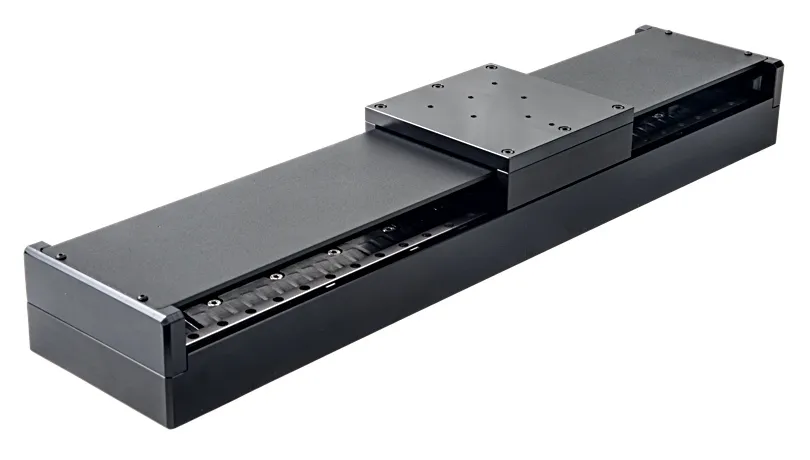
Additionally, the maintenance requirements are greatly reduced. Fewer moving parts mean less wear and tear, lower risk of mechanical failure, and less downtime. Over the lifespan of the motor, this can result in substantial cost savings and improved reliability for industrial operations.
However, selecting the right direct drive linear motor requires understanding the trade-offs. While they provide exceptional performance, they can have higher upfront costs compared to conventional motors. Designers also need to carefully consider thermal management, power supply, and integration with control systems to ensure optimal operation.
In short, grasping the fundamentals of direct drive linear motors is the first step toward making an informed choice. By understanding how they work, their unique benefits, and potential challenges, you can lay the foundation for selecting a motor that perfectly aligns with your application’s performance requirements.
Factors to Consider When Choosing a Direct Drive Linear Motor
Choosing the right direct drive linear motor goes far beyond simply selecting the highest power rating. To ensure optimal performance, reliability, and efficiency, engineers and system designers need to consider multiple factors that affect both short-term operation and long-term system success. Here’s a detailed breakdown of the key aspects to evaluate before making your choice.
1. Thrust and Force Requirements
The first step in selecting a direct drive linear motor is to determine the required thrust or force for your application. This depends on factors such as the weight of the load, friction, and acceleration requirements. Underestimating the force can lead to slower motion, reduced precision, and even motor overheating, while oversizing the motor unnecessarily increases costs and energy consumption.
When evaluating thrust, consider both continuous force and peak force. Continuous force is the amount the motor can sustain without overheating over time, while peak force indicates the maximum push during short bursts. Accurate calculation ensures that your motor performs efficiently under both normal and demanding conditions.
Understanding your force requirements is the foundation for selecting a motor that can handle your load reliably without sacrificing performance or longevity.
2. Speed and Acceleration Needs
Next, evaluate the speed and acceleration requirements of your system. Direct drive linear motors excel at high-speed applications due to their low mechanical inertia, but every motor has limits. Exceeding these limits can cause vibrations, reduced precision, and increased wear.
- Maximum speed determines how fast your system can move the load.
- Acceleration dictates how quickly it can reach that speed.
Applications like pick-and-place robotics, packaging machines, or high-speed assembly lines demand careful assessment of these parameters to achieve the desired throughput and timing.
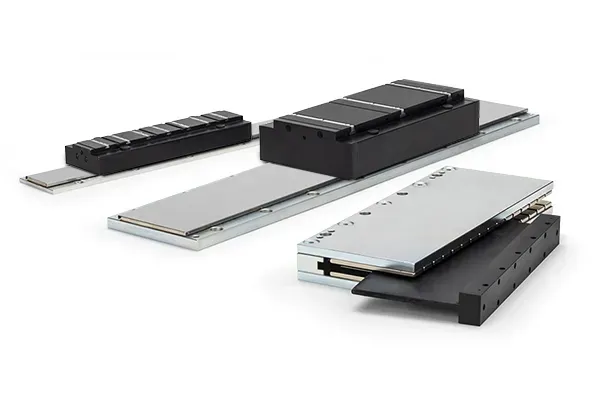
Matching your motor’s speed and acceleration capabilities to your application ensures smooth motion, precise positioning, and optimal productivity.
3. Precision and Repeatability
For many industrial applications, precision and repeatability are critical. Direct drive linear motors offer superior accuracy because they eliminate backlash from gears or screw mechanisms. However, environmental factors such as temperature changes, vibration, and electromagnetic interference can affect performance.
When assessing a motor’s precision:
- Check its positional repeatability (how closely the motor returns to a target position).
- Evaluate resolving capability and feedback options, like linear encoders, which enhance control and reliability.
A motor that maintains consistent precision under varying conditions ensures product quality and minimizes errors in automated processes.
4. Duty Cycle and Thermal Management
The duty cycle refers to how often and for how long the motor operates under load. Continuous operation generates heat, and without proper thermal management, the motor may experience reduced efficiency, decreased lifespan, or even failure.
Considerations include:
- Peak and continuous force ratings versus operating temperature.
- Integration with cooling systems if high duty cycles or harsh environments are involved.
Factoring in duty cycle and thermal requirements protects your investment and ensures stable performance over the motor’s lifetime.
5. Efficiency and Energy Consumption
Efficiency is not just about electricity bills, it also impacts heat generation, cooling requirements, and overall system performance. High-efficiency motors convert more electrical energy into usable motion, reducing waste and operational costs.
- Look for motors with low energy consumption at your typical operating load.
- Consider regenerative options if your system allows for energy recovery.
Prioritizing efficiency leads to cost savings, improved reliability, and sustainable operation over time.
6. Integration and Control System Compatibility
Finally, your motor must integrate seamlessly with your existing control system. Direct drive linear motors often require specialized controllers or feedback mechanisms to fully exploit their capabilities.
- Evaluate compatibility with your motion controller, PLC, or CNC system.
- Consider ease of programming, tuning, and diagnostics.
Ensuring smooth integration avoids operational headaches and maximizes the motor’s potential in real-world applications.
Selecting the right direct drive linear motor is a balancing act between performance, precision, efficiency, and system integration. By carefully evaluating thrust, speed, precision, duty cycle, energy efficiency, and control compatibility, you can make an informed choice that enhances productivity, reliability, and long-term operational success.
Tips for Selecting the Optimal Direct Drive Linear Motor
When selecting the optimal direct drive linear motor, it’s important to focus on how the motor will perform in your real system rather than just comparing specs. Start by clearly defining your system requirements: the load to be moved, the required speed and acceleration, and the level of precision needed. These factors form the foundation for making the right choice.
ITG offers a range of high-performance linear motors tailored for different industrial applications. Their lineup includes iron-core motors, which are ideal for applications requiring high thrust and continuous operation; ironless motors, designed for ultra-smooth motion with minimal cogging and high precision; and customizable motors, which can be adapted to unique environments or specific mechanical constraints. Exploring these types helps you align your selection with the exact needs of your system.
Practical advice is to evaluate the motor under real operating conditions whenever possible. Testing ensures that acceleration, thermal behavior, and motion smoothness meet your expectations, while also revealing potential integration challenges with controllers, feedback systems, or mounting setups.
Finally, collaborating with experienced manufacturers like ITG can make a significant difference. Their guidance on motor type selection, integration, and optimization ensures that your system achieves maximum performance, reliability, and long-term efficiency. By considering the right type of linear motor from ITG, you can confidently design an automation system that meets both your technical and operational goals.
Conclusion
Choosing the right direct drive linear motor is more than a technical decision, it’s a strategic step that can define the efficiency, precision, and reliability of your entire automation system. By carefully considering factors like thrust, speed, precision, duty cycle, and system integration, you ensure that your motor not only meets specifications but also performs optimally in real-world conditions.
Leveraging trusted options from manufacturers like ITG, with their range of iron-core, ironless, and customizable linear motors, allows you to confidently match the right technology to your application. Ultimately, a well-chosen linear motor maximizes productivity, minimizes downtime, and delivers long-term value for your operations.